Chengdu Museum 成都博物馆
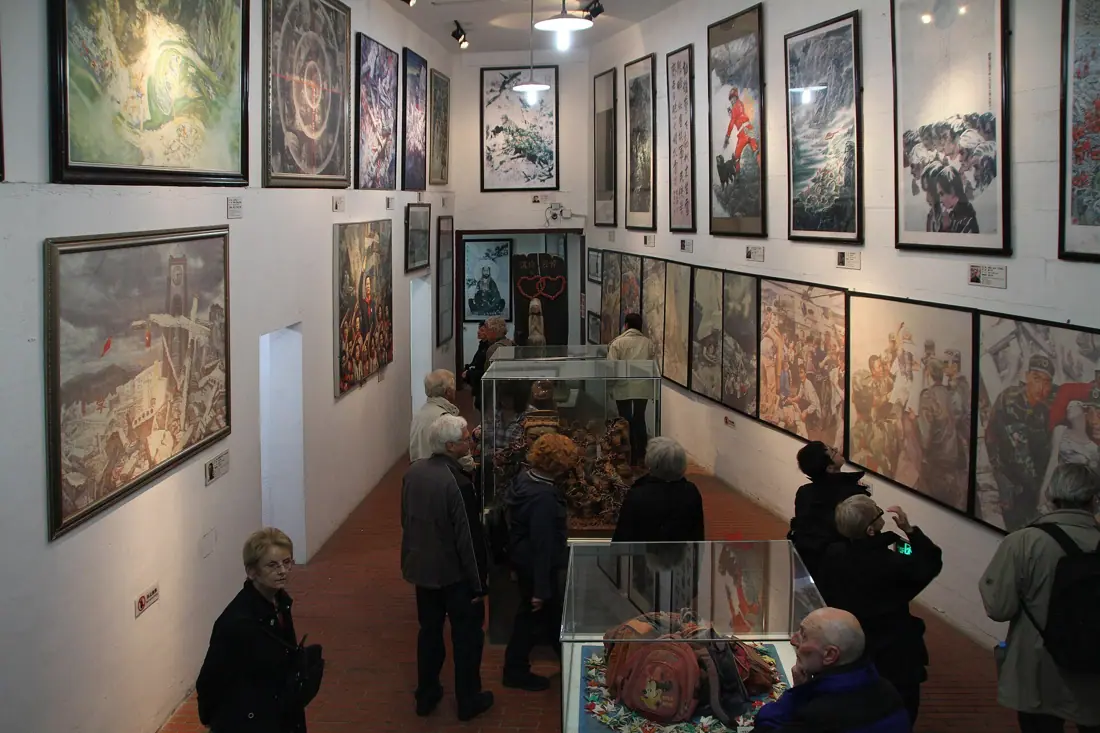
A museum in central Chengdu covering the history and culture of the city and the surrounding Sichuan region.
Give it: half a day
Pandas, teahouses and the Dujiangyan irrigation works
Open Chengdu on the mapKeep what you like on this page or on the map: it all lands in one China book, ready to save as a PDF.
Take Chengdu with you — the 3-day plan below as a printable guide that works with no internet: Phone PDF · A4 PDF to print
Give it 3 days
Give it 3 days
A suggested way to split it: the best-known sights first, each day kept to one part of town. Move things around as you like.
Take this 2-day plan with you: Phone PDF · A4 PDF to print
Take this 3-day plan with you: Phone PDF · A4 PDF to print
Compared with 2 days, this adds Mount Qingcheng.
Take this 4-day plan with you: Phone PDF · A4 PDF to print
Compared with 3 days, this adds Chengdu Museum, Du Fu Thatched Cottage, and Temple of Marquis Wu.
Take this 5-day plan with you: Phone PDF · A4 PDF to print
Compared with 4 days, this adds Wenshu Monastery and Jinsha site.
Not on a Monday: Chengdu Museum is closed then · ✓ Oct 7, 2026
Chengdu Museum: when tickets open is not checked yet. Book on its official site.
Chengdu Research Base of Giant Panda Breeding: tickets open 14 days ahead. Book in its WeChat mini program “成都大熊猫繁育研究基地”, with your passport; each of you books under your own name.
source ↗Pandas, teahouses and the Dujiangyan irrigation works.
Known for: Dujiangyan, Chengdu Research Base of Giant Panda Breeding, Mount Qingcheng, People’s Park teahouse.

A museum in central Chengdu covering the history and culture of the city and the surrounding Sichuan region.
Give it: half a day
China’s top rating (5A) · World Heritage
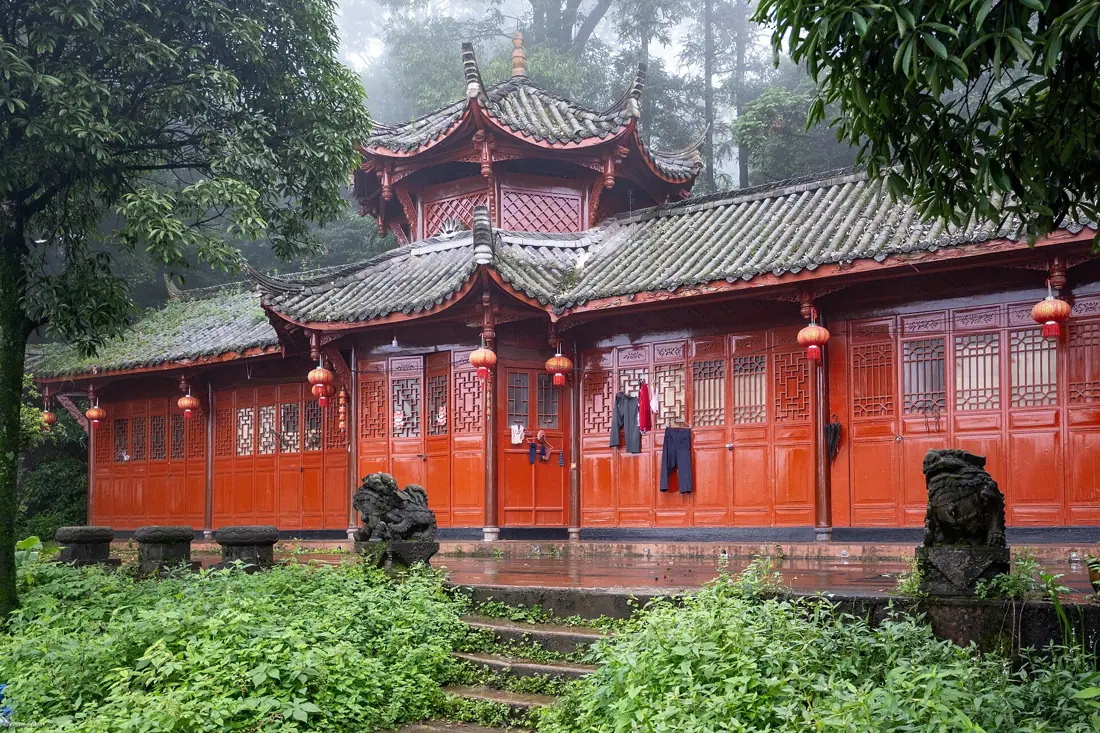
A green, forested mountain near Chengdu, dotted with Taoist temples and shrines. It is one of the birthplaces of Taoism in China.
Give it: a full day
Opening days and booking not checked yet — look again before you go.
A teahouse in the middle of People's Park in central Chengdu, with bamboo chairs, tables under trees, and tea served in covered cups. It is a long-standing spot for locals to sit, talk and play mahjong.
Give it: 1–2 hours
Hoursnot checked yet
Three restored lanes of traditional courtyard houses in central Chengdu, now mostly shops, teahouses and restaurants. The architecture is Qing and Republican-era, and the lanes are pedestrianised.
Give it: 1–2 hours
Hoursnot checked yet
A large Buddhist monastery in Chengdu, active and with several halls, gardens and a teahouse. It has been on this site for centuries and is one of the better-known monasteries in the city.
Give it: 1–2 hours
Hoursnot checked yet
Protected national monument
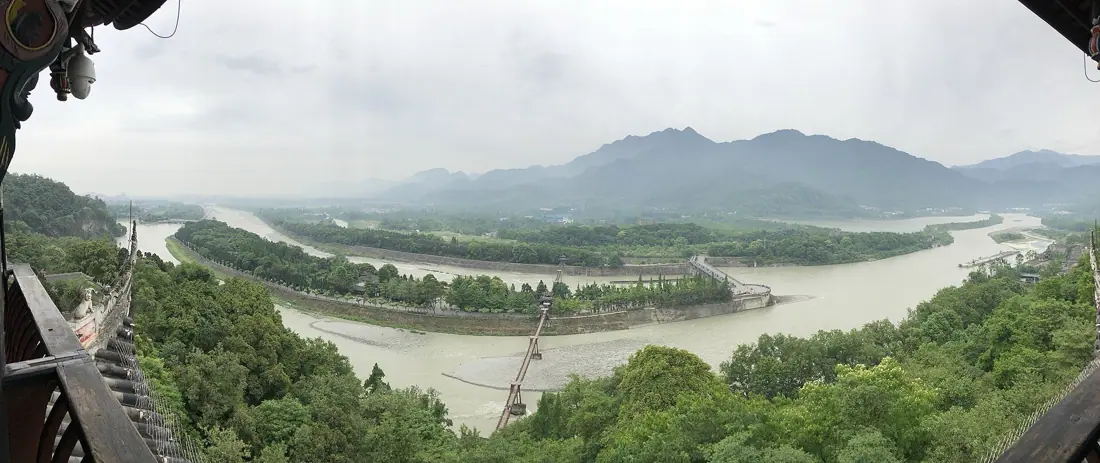
An ancient irrigation system on the Min River near Chengdu, using a split channel, a levee and a spillway to control floods and water the Chengdu plain. It was built in the third century BC and is still in use.
Give it: half a day
Hoursnot checked yet

China’s second rating (4A)
A research and breeding centre on the outskirts of Chengdu, with enclosures for giant pandas, red pandas and other species. It is one of the main places to see pandas in China.
Give it: half a day
Hours, summer (Mar 1 – Oct 31)07:30–18:00 · last entry 17:00Hours, winter (Nov 1 – Mar 1)08:00–17:30 · last entry 16:30
source ↗ClosedNone — open every dayBookingRequired — opens 14 days ahead, real-nameTicket¥55
source ↗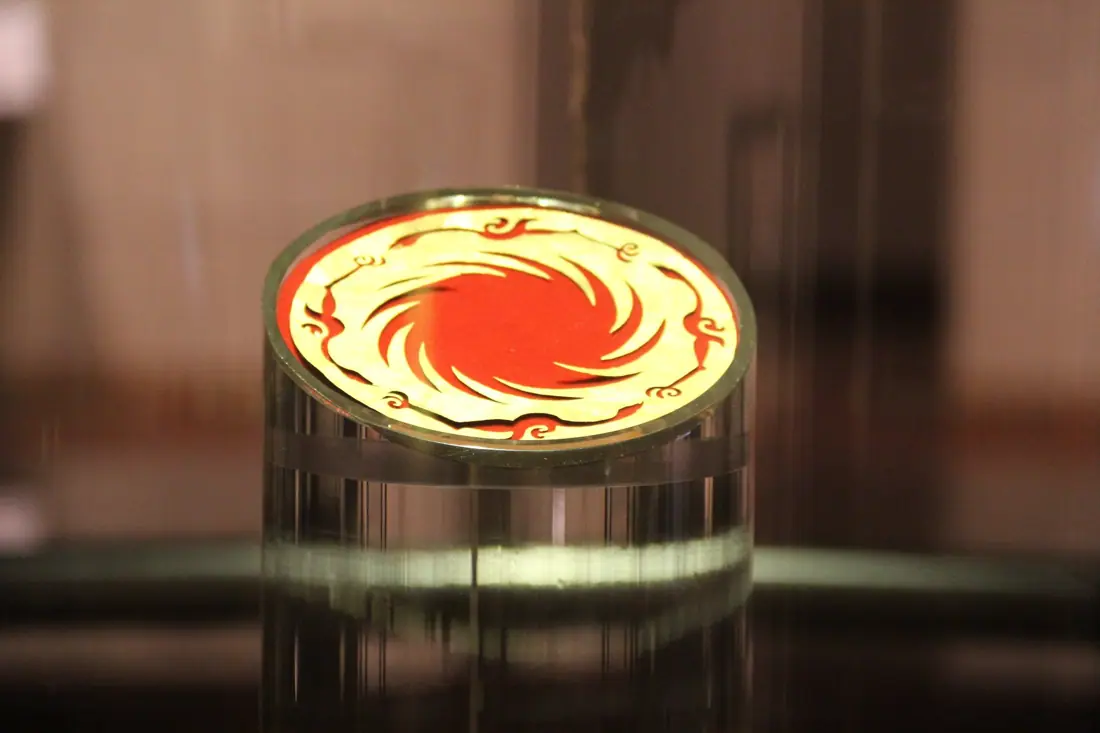
Protected national monument
An archaeological site and museum in Chengdu with remains of a Shu kingdom settlement, including gold masks, jade and elephant tusks. It dates to roughly the same period as Sanxingdui.
Give it: half a day
Photo: Gary Lee Todd, Ph.D., CC0, via Flickr (via Openverse)
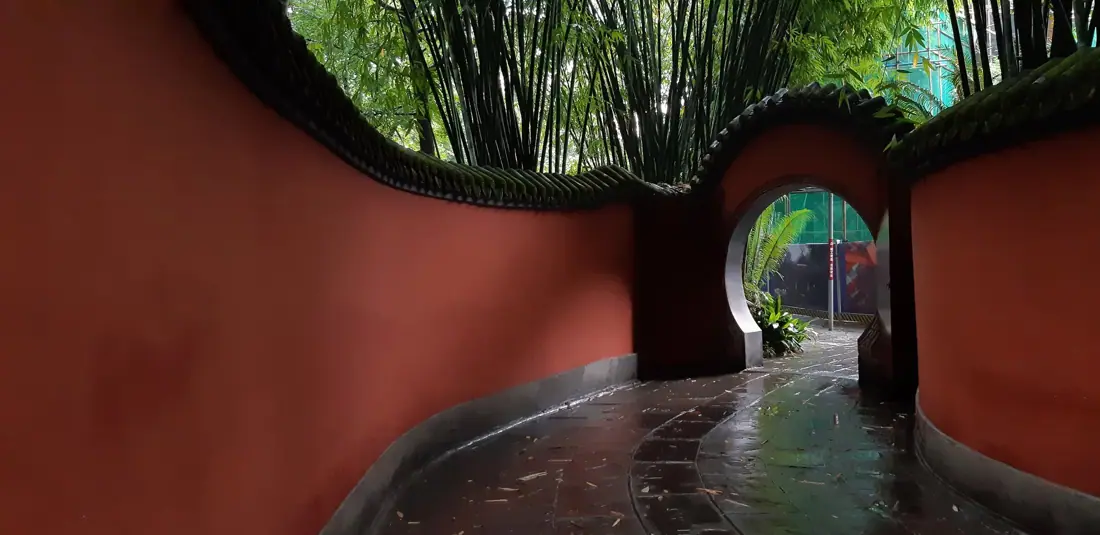
China’s second rating (4A) · Protected national monument
A park and museum in Chengdu marking where the Tang poet Du Fu lived in the 8th century. The thatched cottage is a reconstruction, but the site has been kept as a memorial for centuries.
Give it: 1–2 hours
Photo: blog.woodford, Public Domain, via Flickr (via Openverse)
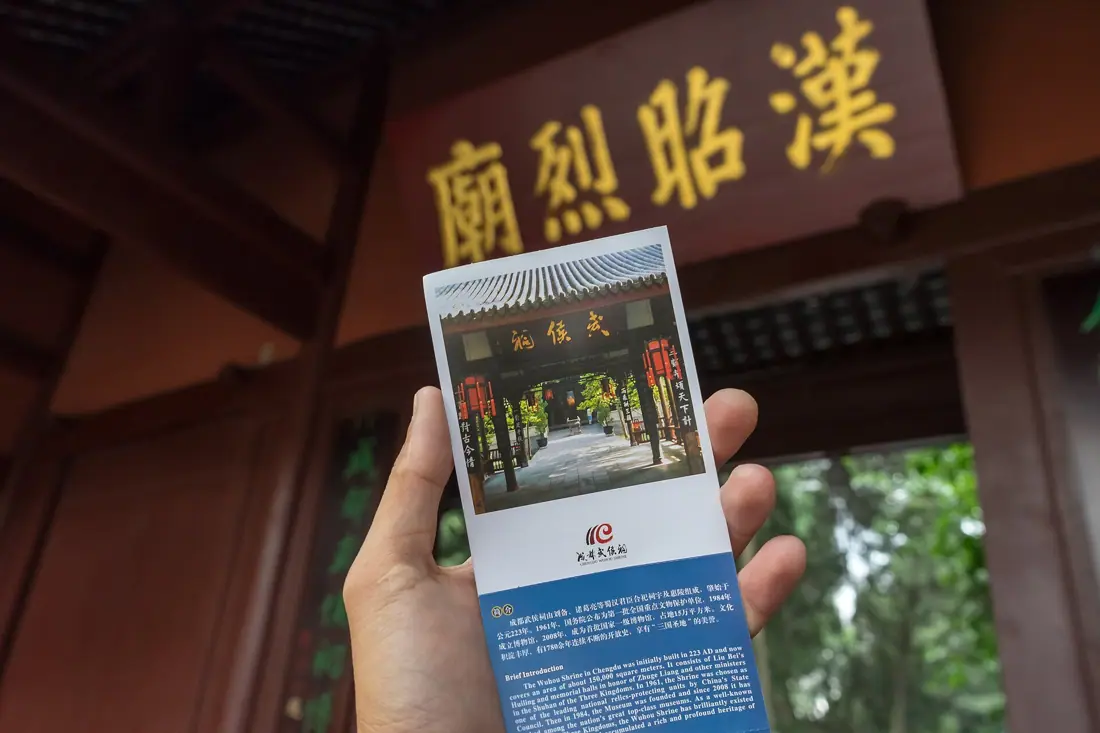
China’s second rating (4A) · Protected national monument
A temple and museum complex in Chengdu dedicated to Zhuge Liang, the Three Kingdoms strategist, and Liu Bei. It includes a garden and a museum of Three Kingdoms relics.
Give it: 1–2 hours
Hours09:00–18:00 · last entry 17:00
ClosedNone — open every dayTicket¥50
source ↗Not worth the queue: Paying Wuhou Temple entry for the halls — The buildings hold dust-covered statues of obscure figures behind glass; the draw is the gardens and the street outside Instead: The garden courts inside, then Jinli street's snack stalls next door
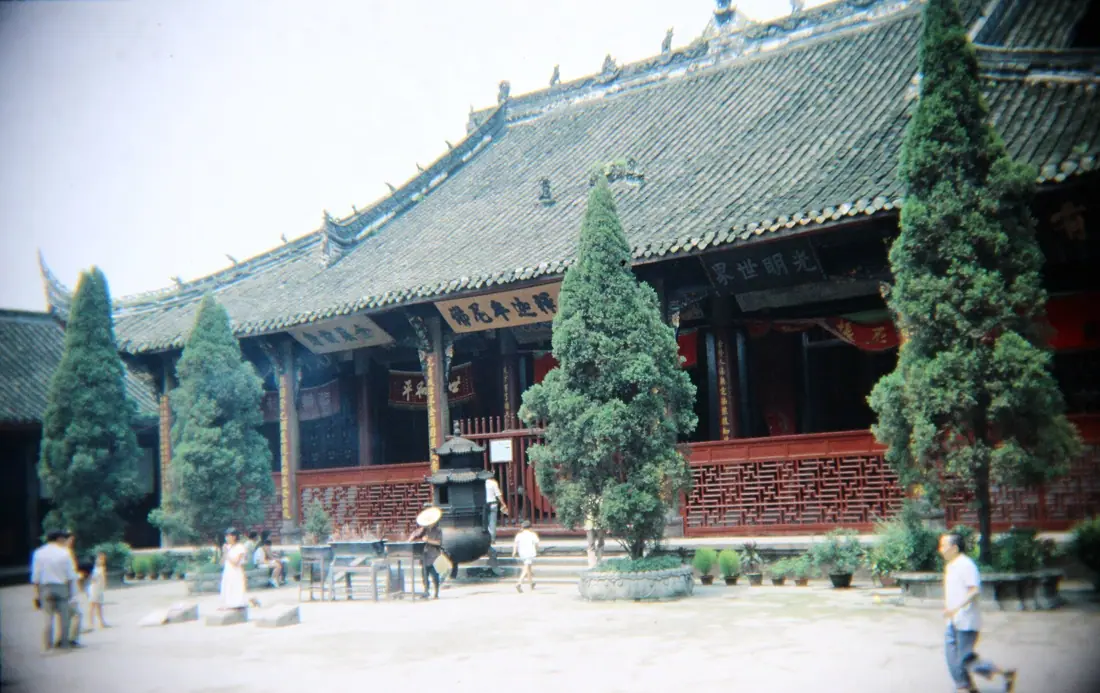
Protected national monument
A Buddhist temple in Xindu, Chengdu, with a Tang-founded history, a tall pagoda and halls used by an active monastic community.
Give it: 1–2 hours
Hoursnot checked yet
Photo: Gary Todd from Xinzheng, China, CC0, via Wikimedia Commons
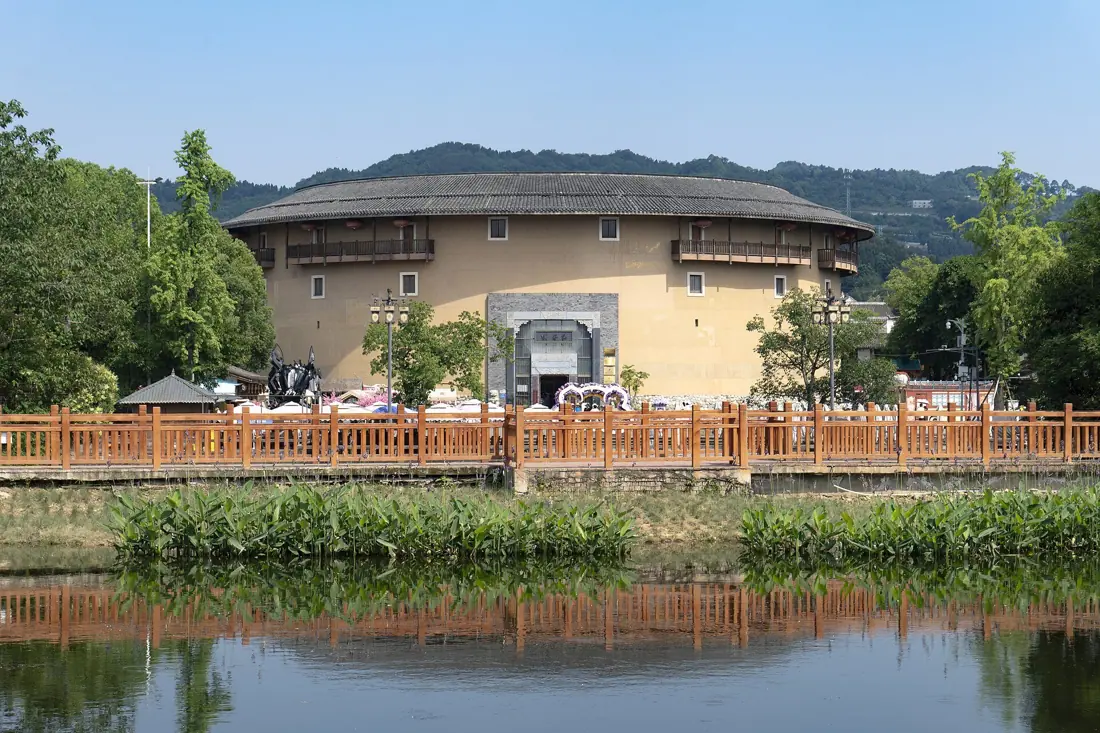
China’s second rating (4A) · Protected national monument
A historic town east of Chengdu, settled largely by Hakka migrants, with old streets, guild halls and a working teahouse culture.
Give it: half a day
Hoursnot checked yet
ClosedNone — open every dayTicketFree
China’s top rating (5A)
A historic town in Dayi County, Chengdu, with preserved architecture from the early 20th century, including the Liu family estate. It is a national 5A-rated scenic area.
Give it: half a day
Hours09:00–17:30 · last entry 17:00
ClosedNone — open every dayTicket¥40
China’s second rating (4A)
A historic town near Chengdu with old wooden houses, a main street and a temple. It sits at the edge of the hills that rise towards Qingcheng Mountain.
Give it: half a day
Hoursnot checked yet
TicketFree
Off the beaten path
Western Sichuan's unhurried river town: tea under dark wooden eaves and no ticket gate.
Hoursnot checked yet
TicketFree
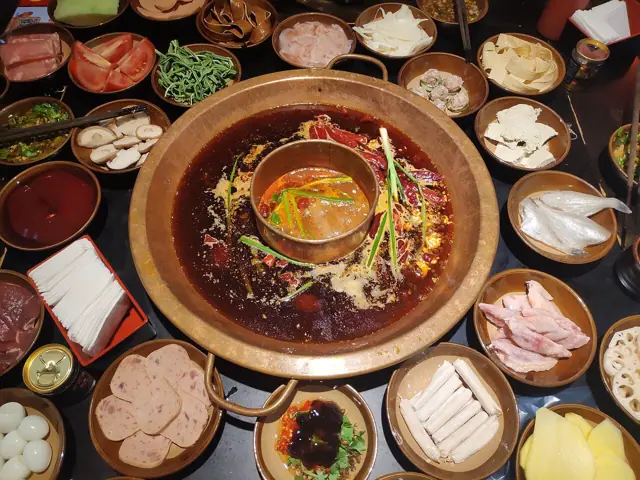 成都火锅HotpotA personal cauldron of red broth in the middle of the table, meat and tripe blanched by the minute, Chengdu's social engine.Known for it: Yangya Yongya Hexian hotpot 漾亚·雍雅合鲜(桐梓林东路店)Photo: Сюй Фаньцзе, CC BY-SA 4.0, via Wikimedia Commons
您好,两位想吃微辣鸳鸯锅,麻烦您帮我们调个油碟,谢谢您。
Two of us would like a mild half-and-half hotpot — could you set up our dipping bowls, please?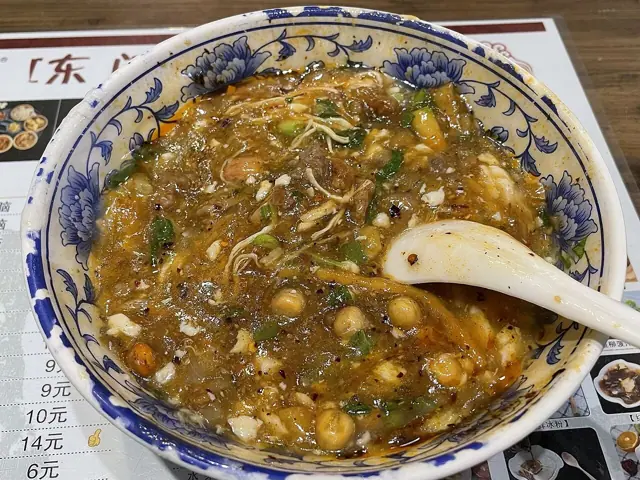 麻婆豆腐Mapo tofuThe original mapo tofu at its 1862 birthplace, numbing, silken and served still bubbling in a hot stone bowl.Known for it: Chen Ma Po Dou Fu 陈麻婆豆腐(青华路店)Photo: Coolli22, CC BY-SA 4.0, via Wikimedia Commons
您好,一份麻婆豆腐,微辣,谢谢您。
Hello, one mapo tofu, mild please.您好,两位,先各拿一把荤素串串,微辣锅底,谢谢您。
Hello, two people, we will grab skewers ourselves, mild broth please.您好,两个麻辣兔头,麻烦您帮我们掰开,谢谢您。
Two spicy rabbit heads — could you break them apart for us, please?您好,一碗甜水面,辣子多放,谢谢您。
Hello, one sweet-water noodle bowl with extra chilli oil please.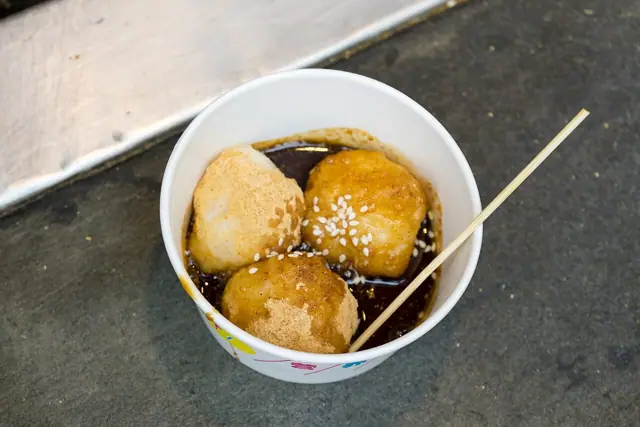 三大炮Three cannon shots · vegGlutinous dough balls thrown at a board so they bounce into sauce, served warm with soy and peanut powder.Photo: JianEn Yu, CC BY 2.0, via Wikimedia Commons
您好,一份三大炮,现做现扔的那种,谢谢您。
Hello, one three-cannon-shots order, freshly thrown please.您好,一份冒菜,微辣,配米饭,谢谢您。
Hello, one maocai bowl, mild, with rice please.您好,两碗红糖冰粉,少冰,谢谢您。
Hello, two brown-sugar ice jellies, less ice please.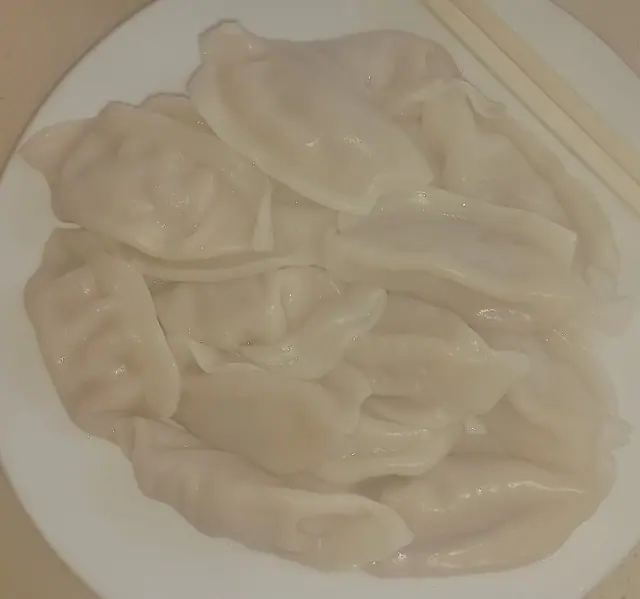 回锅肉Twice-cooked porkBoiled then fried pork belly curled with leek and bean paste, the dish Sichuan families judge a cook by.Photo: NeoBatfreak, CC BY-SA 4.0, via Wikimedia Commons
您好,来一份回锅肉,少放豆瓣,谢谢您。
Hello, one twice-cooked pork, light on the bean paste please.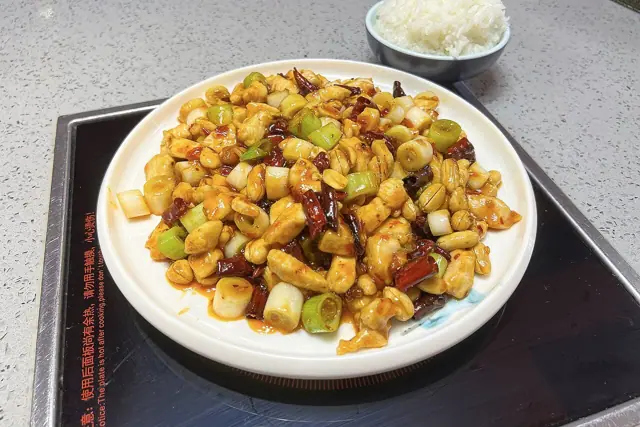 宫保鸡丁Kung Pao chickenThe sweet-sour-chilli wok dish with crunchy peanuts that Sichuan carried to the world, ordered everywhere.Photo: N509FZ, CC BY-SA 4.0, via Wikimedia Commons
您好,宫保鸡丁一份,微辣,谢谢您。
Hello, one Kung Pao chicken, mild please.您好,一份夫妻肺片,麻烦少放花椒,谢谢您。
Hello, one sliced-beef platter, easy on the Sichuan pepper please.您好,一碗担担面,微辣,麻烦您了。
Hello, one dan dan noodle bowl, mild spice, please.Point at the Chinese: it is the name on the menu.
What people who went wish they had known. Their words, gathered with sources; a guide, not checked facts.
the brightest blocks in town; shopping crowds by day, rooftop bars above the temple roofs at night Avoid if you want quiet lanes; this is the loudest corner of Chengdu.
Qing-dynasty lane houses now teahouses and boutiques; bamboo chairs, jasmine tea, mahjong clatter Avoid if you want club nights; the alleys wind down by 23:00.
1980s residential blocks with the city’s best corner kitchens; smoky, chatty, local Avoid if you want hotel polish; stock is guesthouses and older apartments.
Hotels register foreign guests at check-in and report it to the local police; the guest does not need to do anything.
source ↗Staying somewhere other than a hotel - a private rental, a friend's or family's home - the guest or the host registers with the local police within 24 hours of moving in.
source ↗Since 21 September 2026 this out-of-hotel registration can be done online anywhere in China through National Immigration Administration online channels, with the same effect as going in person.
source ↗Since July 2024 hotels and booking platforms across China are asked not to turn foreign guests away over missing 'foreign-guest licence' requirements, and platforms should not carry 'not open to foreign guests' listings.
source ↗Without approval a foreigner may not enter areas restricted to foreigners. The list of such areas is not published centrally - check locally before travelling.
source ↗Month by month for all of China
Chengdu from December to February — fine in December, fine in January, good in February. A January day is about 10° with nights near 3°. Gray, damp cold; teahouse season.
A bamboo chair, a thermos of jasmine tea, and the option of a traditional ear cleaning; Chengdu at its slowest
Arrive at opening; by mid-morning the pandas have eaten and gone back to sleep
The bare-walls eateries locals love: twice-cooked pork, mapo tofu and a soup, at shared tables
Stone steps through green shade past temple gates; the birthplace-of-Taoism mountain an hour from town
An hour of excerpts ending in the mask-switching trick; tea served throughout
A 100 km ring of parks circles the city on a dedicated bike path; any section gives you the feel
Lanterns, Three Kingdoms shows and snack streets inside the Wuhou shrine and Jinli; Chengdu's main New Year outing
○ Not yet checkedA costumed rite cuts the cofferdam and releases the spring irrigation water, reenacting Li Bing's 2,200-year-old project
○ Not yet checkedTeahouse capital: retirees, students and office workers all keep a favourite corner; Sichuan opera and mahjong fill the evenings.
Sichuanese Mandarin, easy to follow.
At Wenshu and other monasteries the vegetarian halls welcome visitors; eat quietly.
Every opening day, ticket and booking line on this page carries the date we last read its official page. Newest first:
We are in China: for each line we read the official Chinese notice and go; the date is when we last read it. How we check.
For a blog or a forum post: the picture links back to this page — please keep the link and the line under it.


