A Buddhist temple in the hills near Jiaocheng, in Shanxi, historically important as a centre of Pure Land Buddhism and long associated with Japanese pilgrims.
Give it: 1–2 hours
Hours (which months: not checked yet)06:00–18:00
Ticket¥15 (depends on the ticket)
Rebuilt from 1954, national key temple since 1983 — a living monastery, quiet hours between services
Tan-luan taught here in his last years and Daochuo from 619-645 — the Pure Land lineage reads stone by stone
The 1605 Hall of Four Heavenly Kings is the oldest standing building — fires of 1090 and 1186 explain the gaps
What to eat here
Lvliang’s own
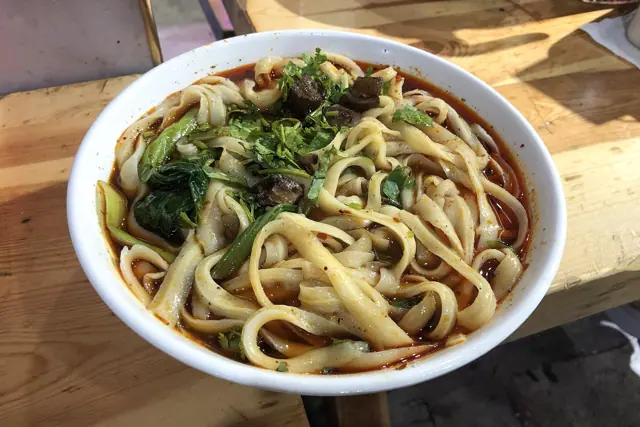
柳林碗团Liulin buckwheat bowl jelly · vegThe Shanxi sweet-and-spicy street legend from Liulin: firm buckwheat jelly in its bowl, cut into diamonds, drowned in chili vinegar.Order it in Chinese
您好,麻烦您来两个碗团,一个辣一个不辣。
Hello, two bowl-jellies - one spicy and one plain please.
兴县冒汤Xingxian mao soupThe border county's breakfast: tiny dumplings and vermicelli in pepper broth, refilled hot until you say stop - 'mao' means refill.Order it in Chinese
您好,麻烦您来一碗冒汤,能续汤吗?
Hello, one mao soup please - can the broth be refilled?
合楞子Potato starch balls · vegA Lüliang mountain dish: grated potato squeezed dry, rolled into balls and steamed - dipped in chili vinegar like a dumpling.Order it in Chinese
您好,麻烦您来一份合楞子,蘸料重些。
Hello, one potato-ball plate with extra dip please.
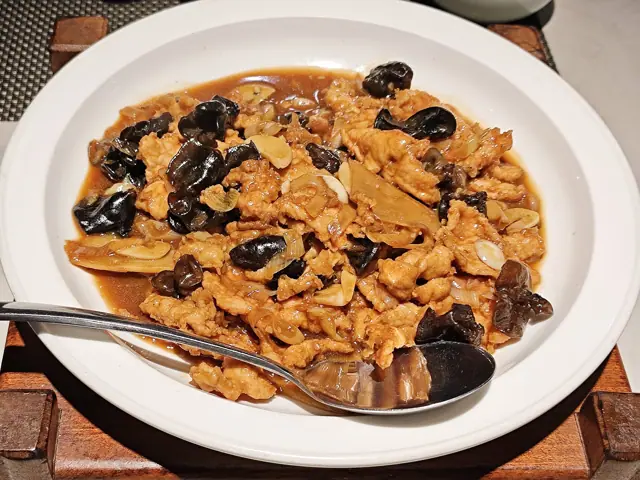
Hello, one oil-passed pork with rice please. Thank you.
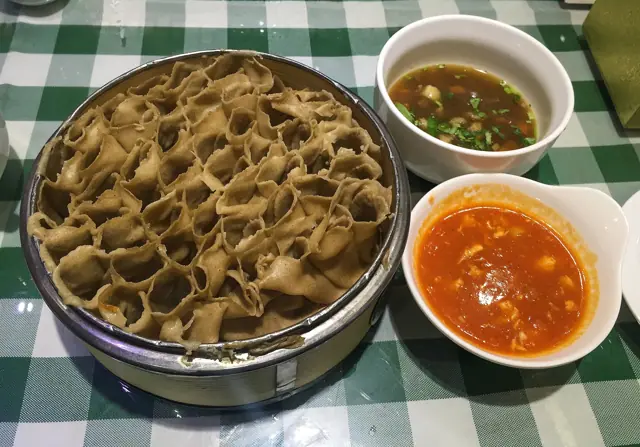
莜面栲栳栳Steamed oat-noodle honeycombsOat-flour tubes stood upright in a steamer like a honeycomb, dipped in garlic-tomato or lamb sauce.Photo: N509FZ, CC BY-SA 4.0, via Wikimedia CommonsOrder it in Chinese
您好,麻烦您来一笼栲栳栳,配羊肉臊子。
Hello, one steamer of oat-noodle honeycombs with lamb sauce please.
头脑Taiyuan mutton breakfast soupTaiyuan's 400-year-old morning soup: mutton, lotus root and yam in a herbal broth, eaten before dawn markets.Order it in Chinese
您好,麻烦您来一套头脑,配帽盒,谢谢。
Hello, one tounao breakfast set with the baked cap-bread please. Thank you.
Point at the Chinese: it is the name on the menu.
Know before you go
What people who went wish they had known. Their words, gathered with sources; a guide, not checked facts.
Built 472-476 under the Northern Wei — 'one of the cradles of Pure Land Buddhism' for China and Japan alike
Japanese pilgrims still visit the lineage root — the Hall of Guru hangs masters' portraits gifted from Japan in 1957
Xuanzhong Temple sits in the hills above Jiaocheng county, on the Taiyuan side of Lüliang — it is nearer Taiyuan than Lüliang city
Where to stay
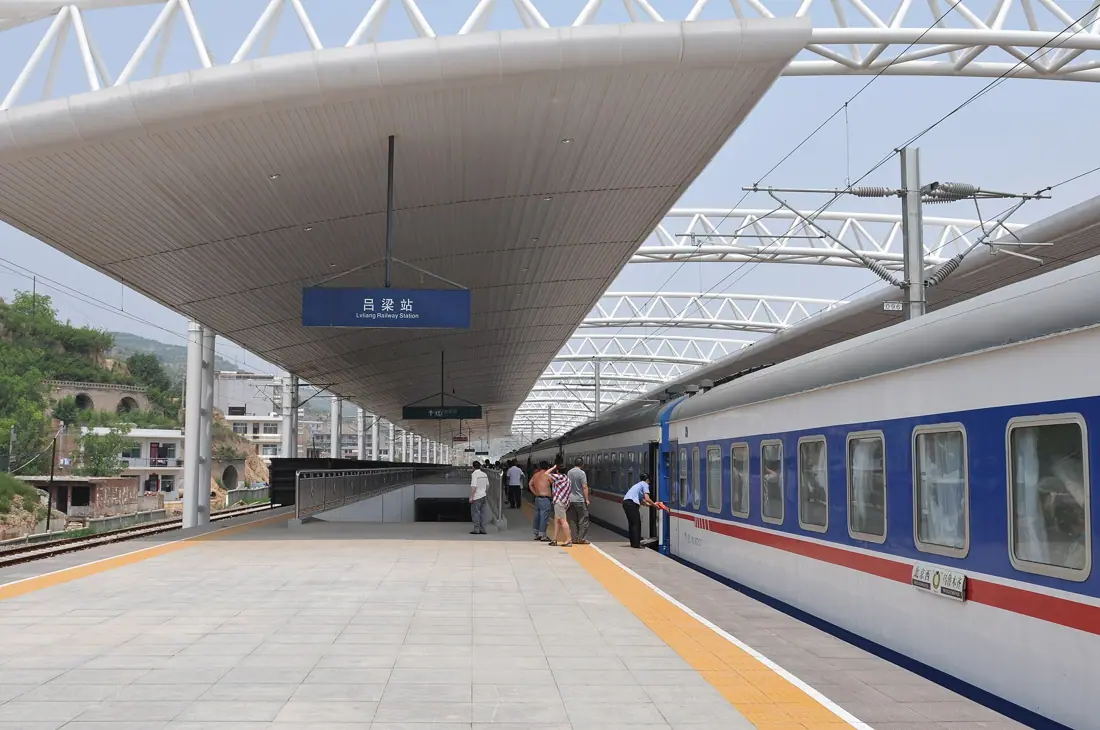
Lishi city town (Century square) 离石城区(世纪广场一带)20 min to Lüliang Railway Station 吕梁站Good for first-timers pairing the Yellow-river loop with Shanxi noodle towns
Valley-floor city between yellow ridges; date-and-walnut shops, simple evening plazas. The river towns are 2 h away - plan an early start.
Qikou river town 碛口古镇90 min to Lüliang Railway Station 吕梁站Good for photographers who want the ferry steps and terrace villages above the Yellow river
Ming-Qing merchant port frozen in loess; mule lanes, oil-lamp courtyards. Cash-only guesthouses; last buses from Lishi mid-afternoon.
Staying as a foreign visitor: the rules
Hotels register foreign guests at check-in and report it to the local police; the guest does not need to do anything.
Staying somewhere other than a hotel - a private rental, a friend's or family's home - the guest or the host registers with the local police within 24 hours of moving in.
Since 21 September 2026 this out-of-hotel registration can be done online anywhere in China through National Immigration Administration online channels, with the same effect as going in person.
Since July 2024 hotels and booking platforms across China are asked not to turn foreign guests away over missing 'foreign-guest licence' requirements, and platforms should not carry 'not open to foreign guests' listings.
Without approval a foreigner may not enter areas restricted to foreigners. The list of such areas is not published centrally - check locally before travelling.