The numbers are the sights listed below. A dashed circle is a sight beyond this map's edge, set on the side it lies: 2 Yanmen Pass, about 50 km northwest · 3 Mount Heng (Shanxi), about 40 km southwest. Open the map full size
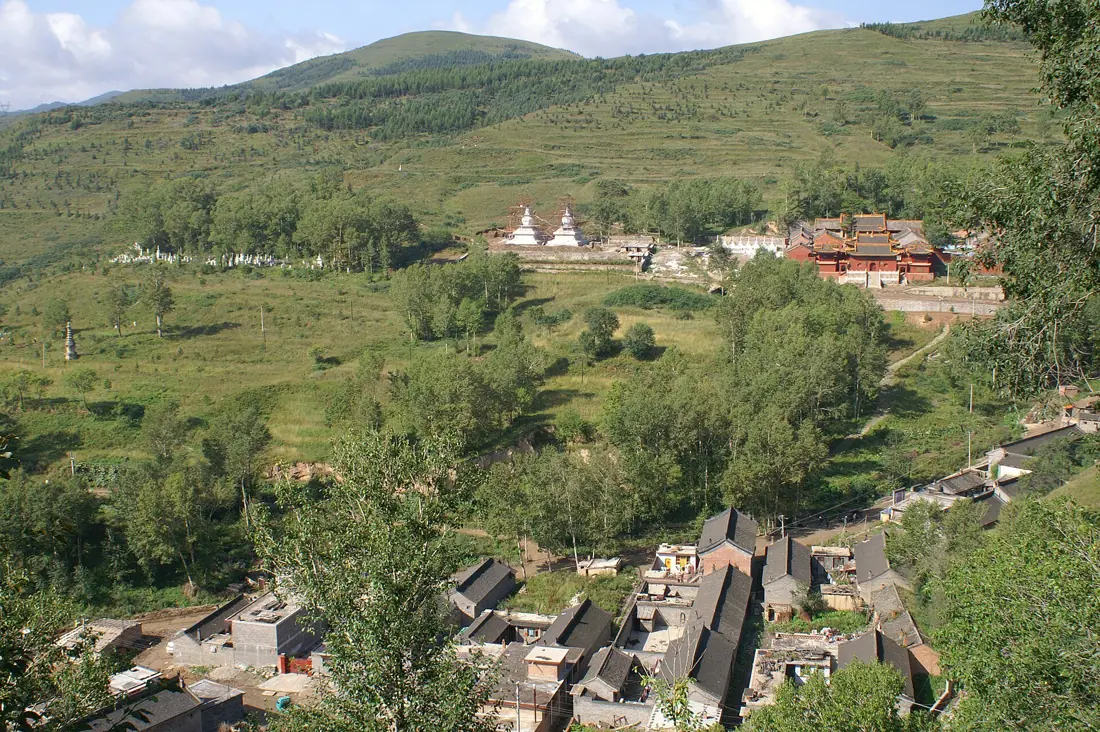
A mountain in Shanxi with five level summits, long a major centre of Chinese Buddhism and especially associated with Manjushri. The temple cluster in the central valley is a UNESCO World Heritage site.
Carry snacks for the terraces — the plateau monasteries sell no food and their toilets are basic; Dailuo Peak's 1,080 steps (or the cable car) buy a view over the whole village
You do not need all five terraces: the South (Jinxiu, 2,474 m) is the lowest, greenest and the nicest single choice; the North (Yedou, 3,058 m) is the highest with noticeably thin air
Not worth the queue: Fomu Cave — The queue for the cave runs 2 hours on weekdays and 7-8 at weekends, and the scenery is ranked below the terraces Instead: Any of the five terraces, or Nanshan Temple south of town
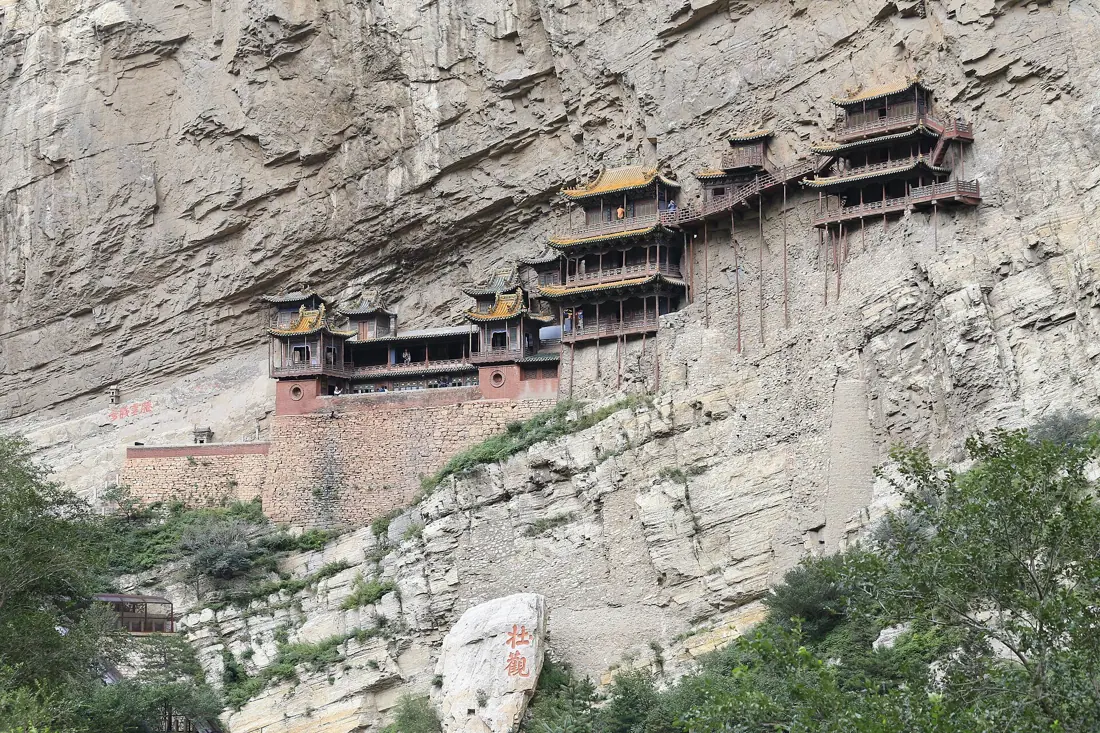
One of China's five sacred Daoist mountains, in Shanxi province. The main sights include the Hanging Temple, built into a cliff face, and the mountain's temples and views.
Give it: a full day
Hours, spring (Mar 1 – Apr 30)08:00–16:30Hours, summer (May 1 – Sep 30)08:00–17:30Hours, autumn (Oct 1 – Oct 31)08:00–16:30Hours, winter (Nov 1 – Mar 1)08:30–16:00
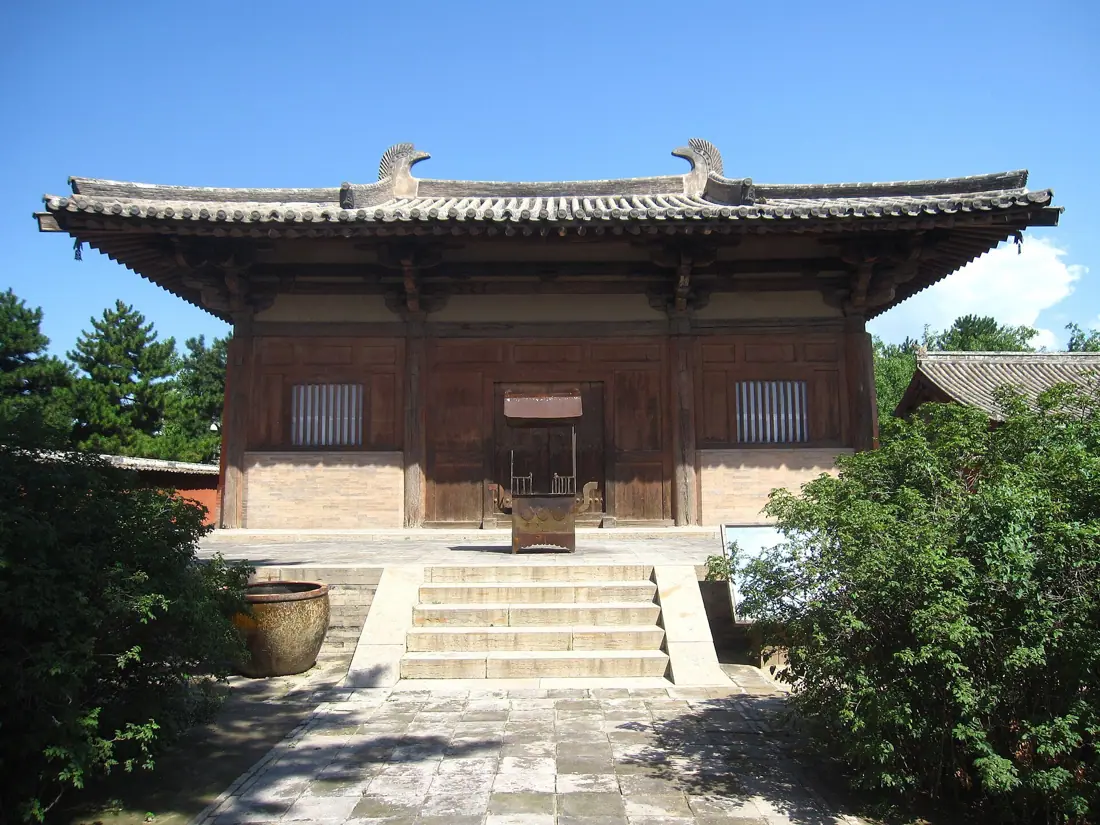
A Buddhist temple in the hills of Shanxi, with a main hall from the ninth century that is among the oldest surviving wooden buildings in China. It holds Tang-era sculptures and is a national protected monument.
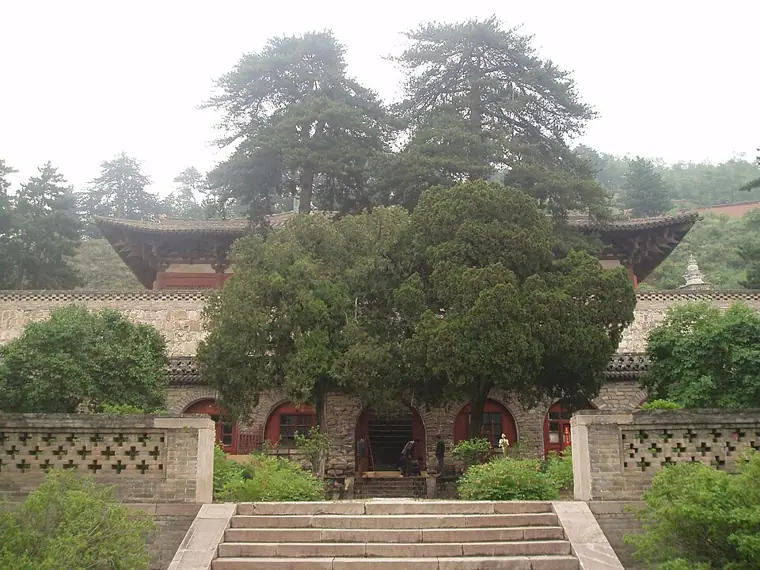
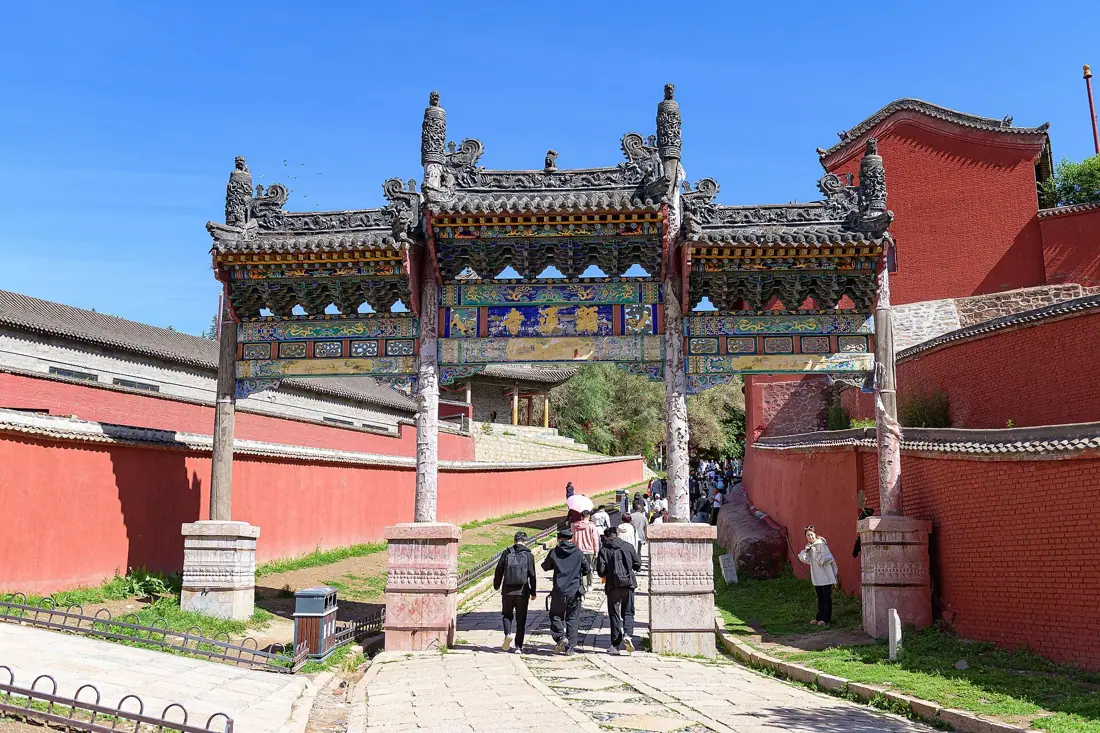
A large Buddhist temple on Mount Wutai, one of China's four sacred Buddhist mountains. It is the oldest and one of the most important temples on the mountain, with halls dating from various dynasties.
Give it: 1–2 hours
Hoursnot checked yet
Walk Xiantong, Tayuan and Pusa Ding top-down so the famous 108 steps at Pusa Ding go down rather than up
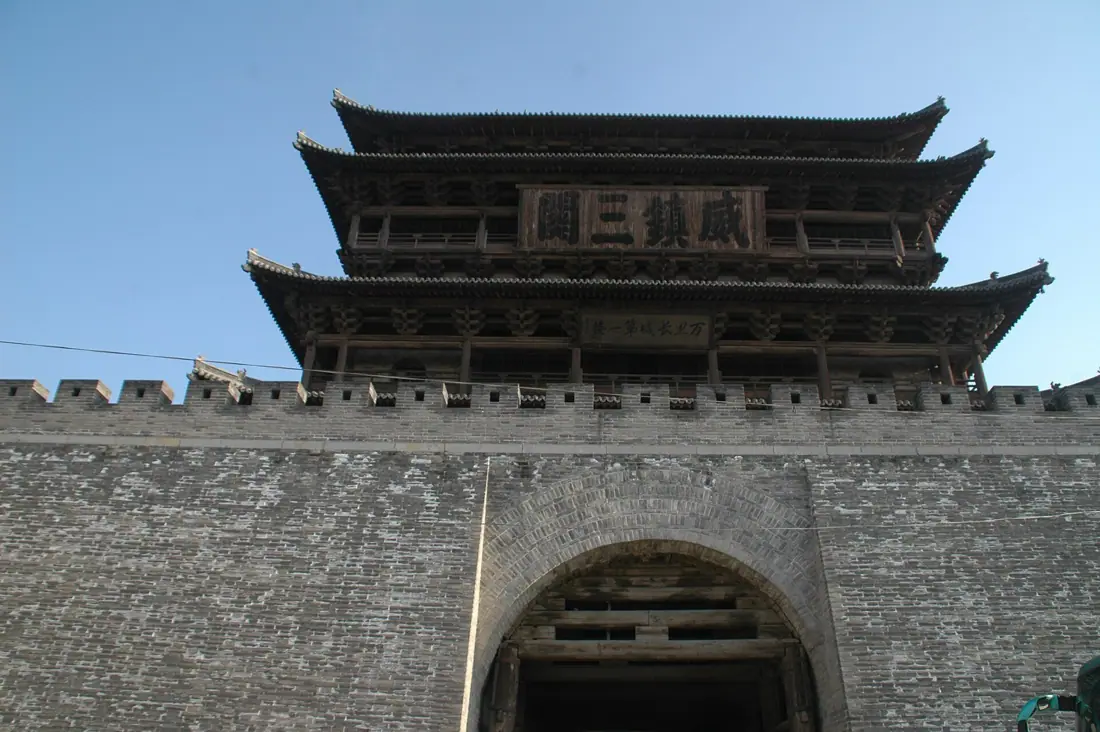
A tall brick and timber drum tower at the centre of Daixian, built in the Ming dynasty and used to keep time and raise alarm on the northern frontier. It is one of the largest surviving towers of its kind in China.
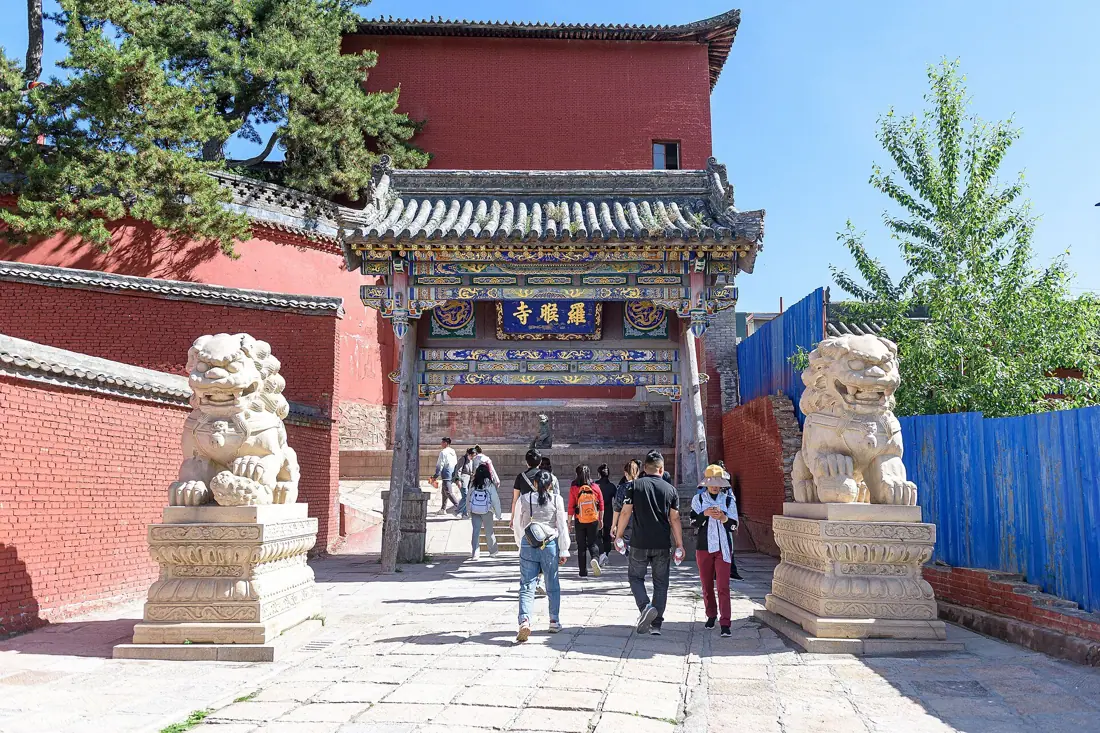
A Tibetan Buddhist temple on Mount Wutai, one of the four great sacred mountains of Chinese Buddhism. It is known for a mechanical lotus that opens to reveal a seated Buddha.
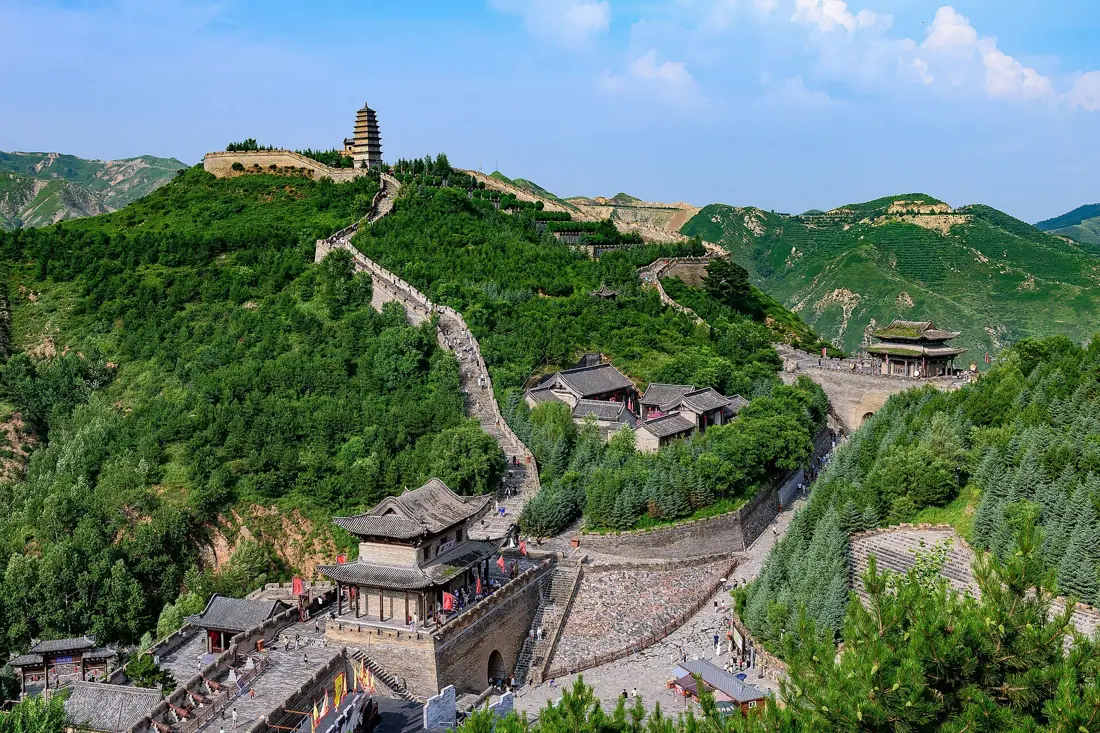
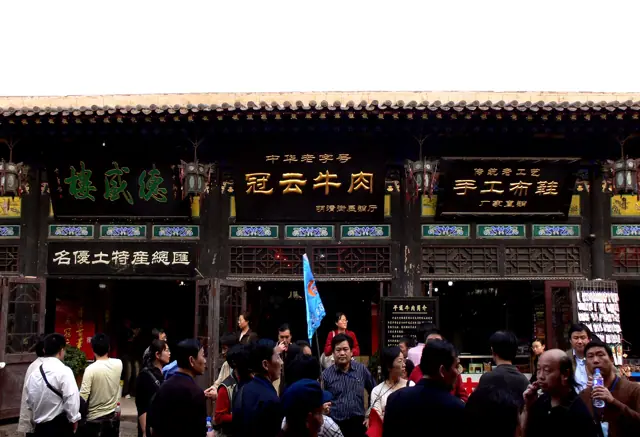
Old frontier garrison town: a giant Ming drum tower and the Yanmen Pass road out through the Great Wall.
Hoursnot checked yet
What to eat here
Mount Wutai’s own
五台素斋Wutai temple vegetarian meal · vegOn China's Buddhist mountain the signature meal is the monasteries' own: mushroom, tofu and mountain greens, no meat at all.Order it in Chinese
您好,麻烦您来一份素斋套饭,谢谢。
Hello, one temple-style vegetarian set meal please. Thank you.
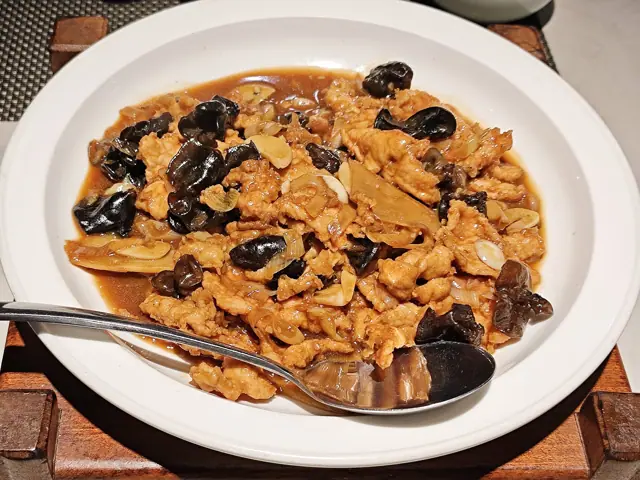
台蘑炖山鸡Tai-mushroom chicken stewWutai's prize ingredient: wild tai mushrooms from the high slopes, stewed with chicken into a deep brown broth.Order it in Chinese
您好,麻烦您先问一下这个炖蘑菇的价钱。
Excuse me, could you tell me the price of the mushroom stew first please?
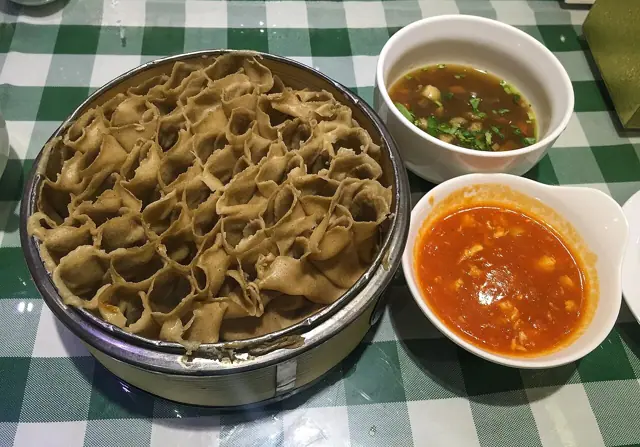
莜面栲栳栳Steamed oat-noodle honeycombsThe mountain oat tubes of Shanxi's cold plateau, steamed in honeycombs and dipped in hot lamb or tomato sauce.Photo: N509FZ, CC BY-SA 4.0, via Wikimedia CommonsOrder it in Chinese
您好,麻烦您来一笼栲栳栳,配羊肉臊子。
Hello, one steamer of oat honeycombs with lamb sauce please.
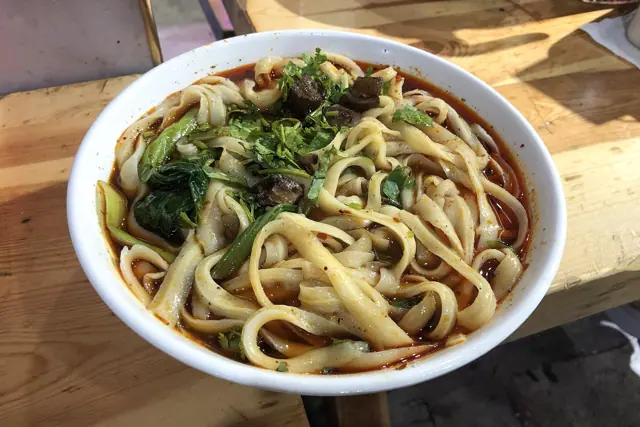
高粱面鱼鱼Sorghum noodle fishLittle hand-rolled sorghum noodles shaped like fish - the mountain villages' wheat-free staple.Order it in Chinese
您好,麻烦您来一碗高粱面鱼鱼,热汤的。
Hello, one bowl of sorghum noodle fish in hot soup please.
油炸糕Shanxi fried sticky cake · vegThe celebration cake of Shanxi tables: glutinous millet dough wrapped around red-bean paste and fried golden.Order it in Chinese
您好,麻烦您来三个油炸糕,豆馅的。
Hello, three fried sticky cakes with bean paste please.
Hello, one oil-passed pork with rice please. Thank you.
头脑Taiyuan mutton breakfast soupTaiyuan's 400-year-old morning soup: mutton, lotus root and yam in a herbal broth, eaten before dawn markets.Order it in Chinese
您好,麻烦您来一套头脑,配帽盒,谢谢。
Hello, one tounao breakfast set with the baked cap-bread please. Thank you.
Hello, half a jin of Pingyao cured beef sliced thin, with a dish of vinegar please.
Before you order
Tai-mushroom stews range from modest to very expensive between neighboring kitchens. Ask the price of the mushroom dish before ordering it.
Temple refectories serve their vegetarian meals at set hours and stop in the afternoon; plan the monastery meal before noon.
Some vegetarian buffets near the ticket gates charge by plate weight; a full tray can cost more than a sit-down main.
Point at the Chinese: it is the name on the menu.
Know before you go
What people who went wish they had known. Their words, gathered with sources; a guide, not checked facts.
Cool even in summer — long trousers in the evening — and eat the local taimo mushroom at its cheapest as a 10-yuan noodle sauce rather than 40-yuan tourist dishes · Jun-Aug
Do not let a driver talk you into a detour for Mingyue Well — it is a 12-minute climb from the main road
Green buses thread the town every 5 minutes until about 18:30-19:00; beyond town, brown minibuses reach far points like Baiyun Temple
Lodging in Taihuai village runs scarce — and pricier — on Saturdays and full/new-moon nights; rack rates like 288 yuan negotiate down to 80-100, so ask and be ready to walk away
Three days is the comfortable shape: town temples one day, a terrace or terraces the next, the out-of-town temples last
One trick to know about
Fortune-telling monksAt shops and at a small temple below Zhenhai Temple, men in robes offer to read your fortune and steer you toward a donationA polite no thanks and moving on is all it takes; the working monasteries do not send monks out to sell fortunes
Where to stay
Taihuai (valley of temples) 台怀镇65 min to Wutaishan North Railway Station 五台山北站Good for first visits; the big lamaseries, the Dwarf Pagoda and the shuttle up the peaks all start in this valley
temple roofs stacked along a cold green valley; pilgrims, incense and noodle shops Avoid if mid-winter; passes and some temples close in heavy snow.
Shahe town (by Wutaishan North) 砂河镇(五台山北站)5 min to Wutaishan North Railway Station 五台山北站Good for early-train nights at the railhead; basic rooms and the first bus into the mountains
a plain rail town on the north rim; cold nights, simple food, early to bed Avoid if you want temple mornings; the valley is 50 km and a pass away.
Staying as a foreign visitor: the rules
Hotels register foreign guests at check-in and report it to the local police; the guest does not need to do anything.
Staying somewhere other than a hotel - a private rental, a friend's or family's home - the guest or the host registers with the local police within 24 hours of moving in.
Since 21 September 2026 this out-of-hotel registration can be done online anywhere in China through National Immigration Administration online channels, with the same effect as going in person.
Since July 2024 hotels and booking platforms across China are asked not to turn foreign guests away over missing 'foreign-guest licence' requirements, and platforms should not carry 'not open to foreign guests' listings.
Without approval a foreigner may not enter areas restricted to foreigners. The list of such areas is not published centrally - check locally before travelling.
Janskip itSevere cold and wind on the open terraces; only for the prepared
FebfineDeep winter; New Year pilgrims crowd Taihuai for first incense
MarfineWinter holds on at altitude; icy paths
AprfineThaw begins; windy and brown
MaygoodMild in the valleys, snow gone from the trails
Junthe best timeGreen meadows and wildflowers; the walking season opens
Julthe best timeA cool refuge from the plains heat; busiest with pilgrims and hikers
Augthe best timeCool days; mountain storms most afternoons
Septhe best timeGolden grass and clear air; excellent walking
OctgoodFirst snow possible; golden larch; holiday week busy
NovfineCold; some temple lodgings close and roads ice over
DecfineDeep winter; snow-covered temples for the hardy
Is Mount Wutai worth visiting in winter?
Mount Wutai from December to February — fine in December, skip it in January, fine in February. Severe cold and wind on the open terraces; only for the prepared.
What you’ll do
Hike between the five terraces on the pilgrim trailseveral days
The full chaotai loop links all five flat tops over two or three days of high-altitude walking
Climb the 1,080 steps to Dailuoding at dawn2–3 hours
The small chaotai for those short on time: one stairway, five directions of Manjushri at the top
Listen to morning chanting at Tayuan templean hour
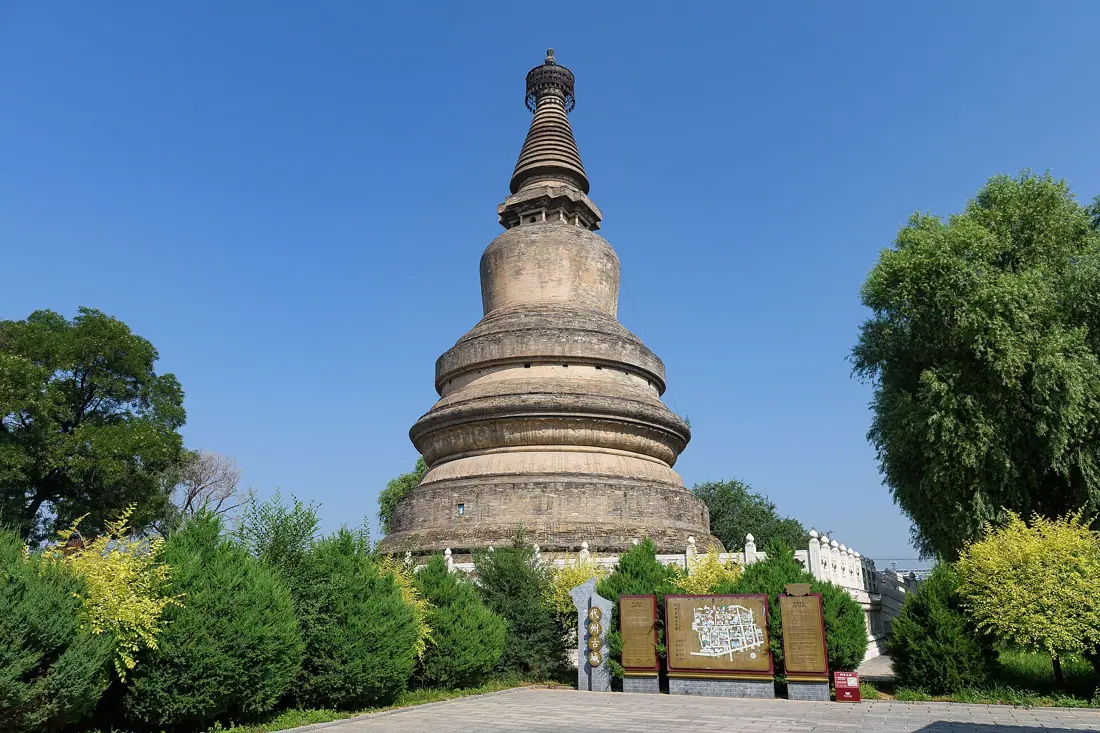
The great white stupa is the valley's landmark; the dawn service is open to quiet listeners
Stay a night in a temple guesthousea full day
Some monasteries take lay guests; simple rooms, vegetarian food, and the 4am drum for morning service
Eat a vegetarian temple lunchan hour
Mushrooms, tofu and mountain greens; Wutai has been cooking for pilgrims for a thousand years
Walk the Taihuai lanes as the evening bells ringan hour
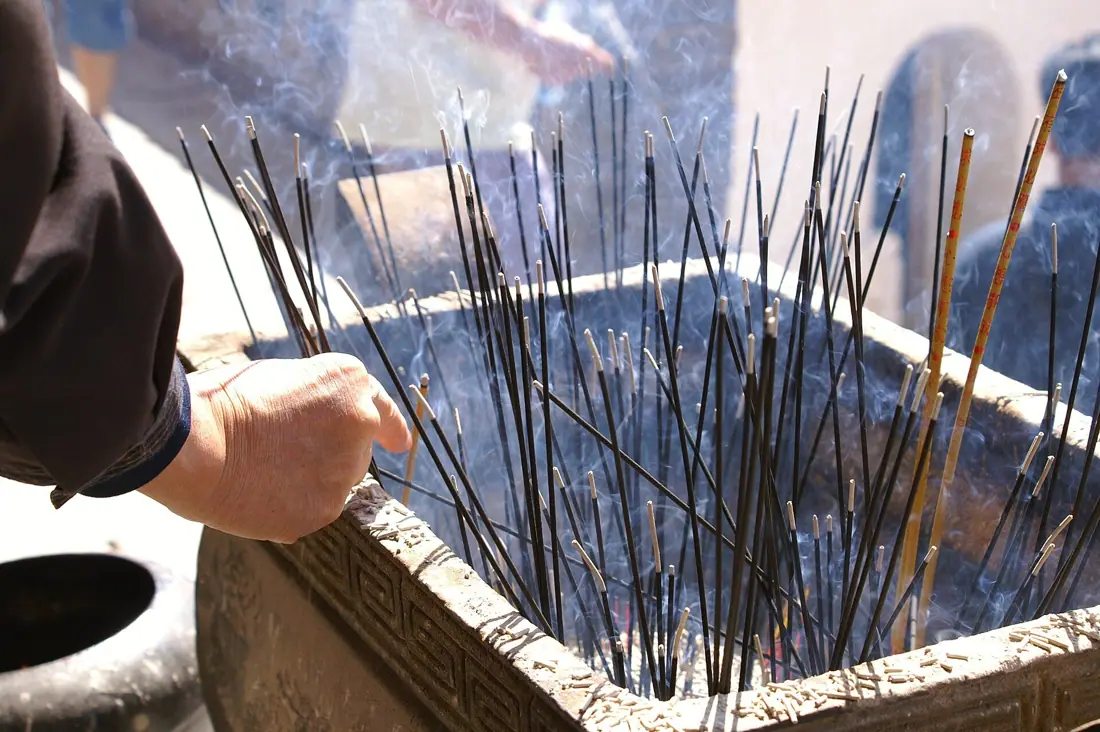
The temple cluster is compact; an evening loop passes stupas, incense smoke and monks going to class
Seasons & festivals
Winter snow on the Wutai terracesNov 1 – Apr 30○ Not yet checked
The people
A living Buddhist mountain: Han and Tibetan monks share the temples, and pilgrims prostrate their way around the five peaks.
Mandarin; Tibetan and Mongolian are heard among pilgrims.
Join the clockwise flow around stupas, step aside for prostrating pilgrims, and never photograph them up close.
Getting to Mount Wutai
Beijing to Mount Wutaiabout 6h12 by fast train
Shanghai to Mount Wutaiabout 9h23 flying, door to door
Guangzhou to Mount Wutaiabout 9h33 flying, door to door
Chengdu to Mount Wutaiabout 10h30 flying, door to door
Xi'an to Mount Wutaiabout 11h05 by fast train
Facts last checked
Every opening day, ticket and booking line on this page carries the date we last read its official page. Newest first:
Mount Wutai, Yanmen Pass, Mount Heng (Shanxi), Daizhou Ancient City
Yanmen Pass
Mount Wutai
We are in China: for each line we read the official Chinese notice and go; the date is when we last read it. How we check.