China’s top rating (5A) · Protected national monument
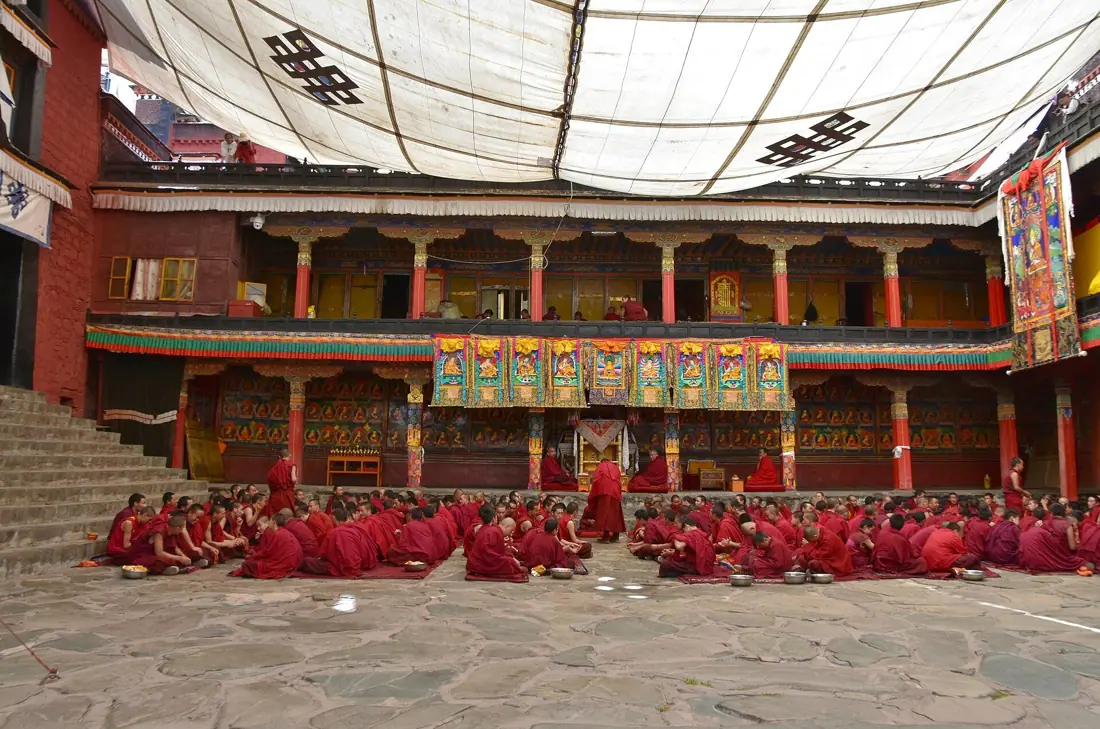
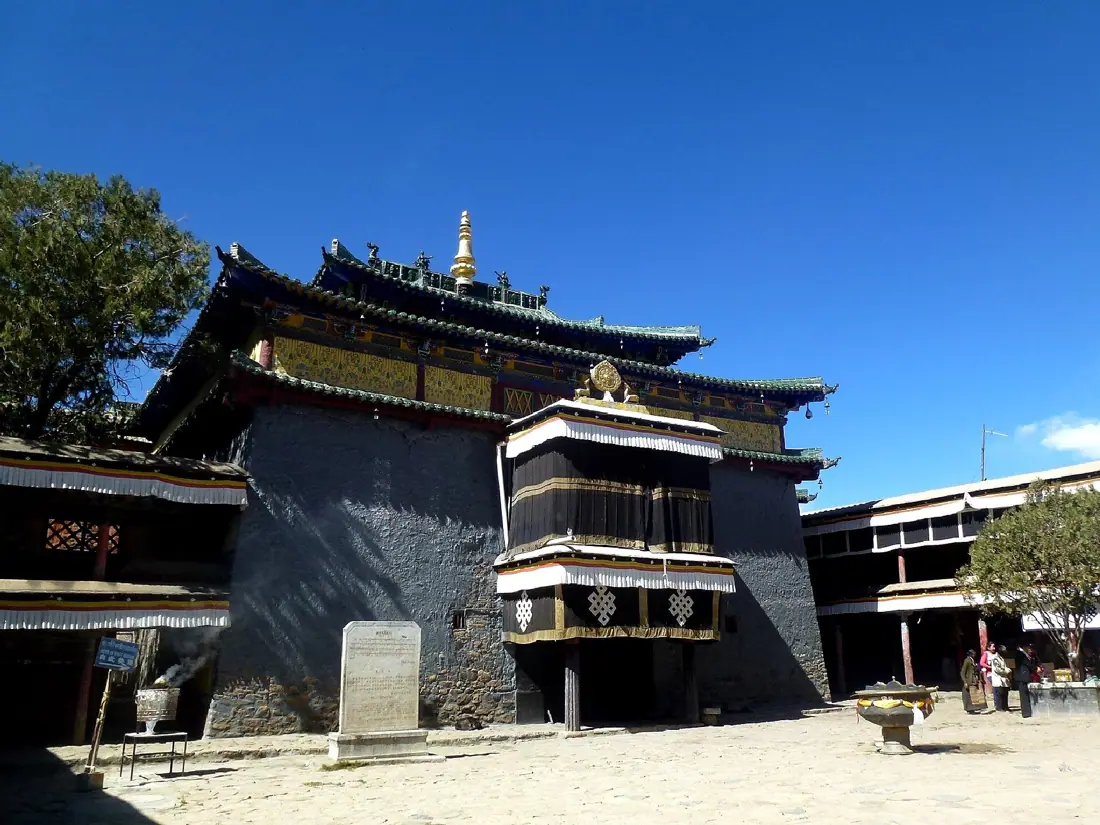
A large Gelug monastery in Shigatse, founded in the fifteenth century and traditionally the seat of the Panchen Lama. Its white and red buildings climb a hillside above the town, with a tall gilded statue of Maitreya inside.
PermitTibet Travel Permit, arranged through a licensed agency
Give your eyes a minute in the dark Maitreya chapel before judging the giant gilded statue — and keep the camera away inside
Walk the chapel ladder in order — courtyards, the Maitreya chapel, the memorial stupa chapels, the assembly hall — and ask at entry which halls are open today, since they close for rituals and lunch without a timetable
Budget three to four slow hours — the whole site is stairs, and pacing beats the altitude; carry sun protection and a warm layer
Not worth the queue: Climbing the outer kora on your first day in town — The circuit adds elevation gain on uneven footing above 3,800 m — the monastery itself is a complete visit Instead: The chapel route at a slow pace; save the kora for a clear later morning
China’s second rating (4A) · Protected national monument
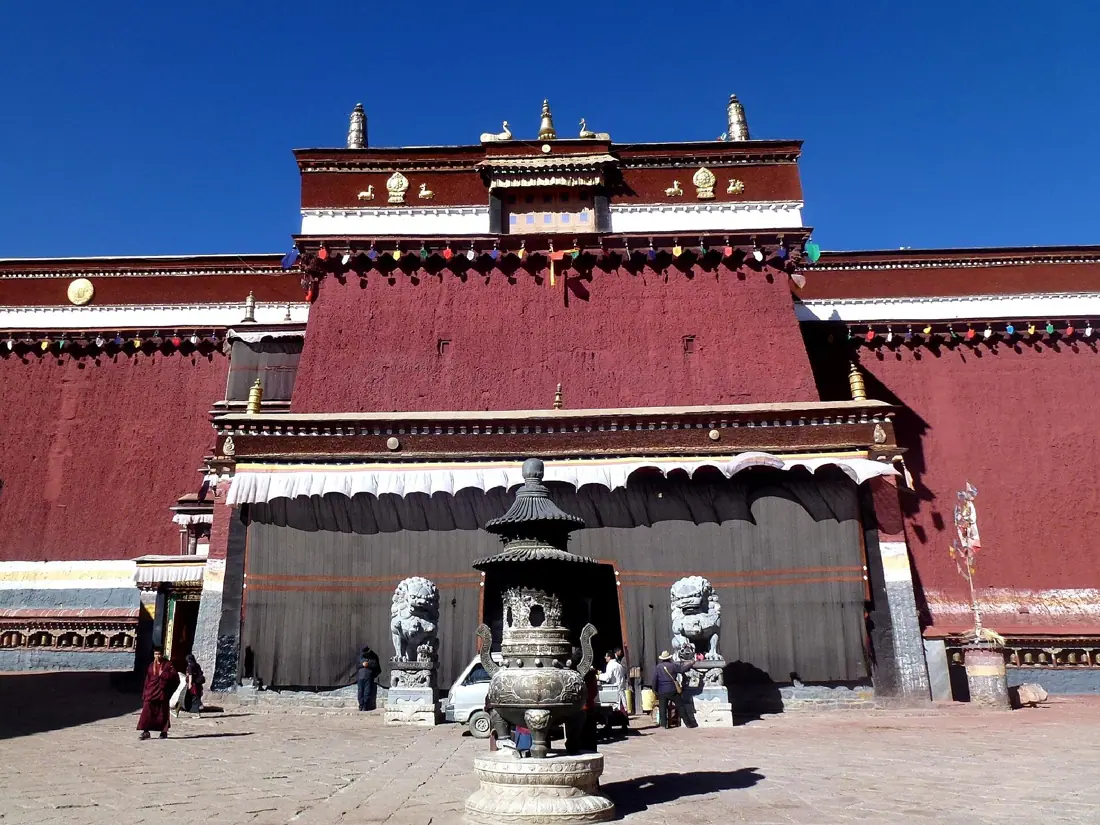
A large Tibetan Buddhist monastery in Shigatse prefecture, the seat of the Sakya school. Its massive grey walls and extensive library are its defining features.
Give it: half a day
Hoursnot checked yet
ClosedNone — open every day
PermitTibet Travel Permit, arranged through a licensed agencyAltitude4,310 m — take the first day slowly
The 1268 southern monastery was raised by reportedly 130,000 workers — its look differs from Lhasa temples, worth knowing before you go
The library is the sight: 84,000 volumes stacked along 60-metre walls, including a scripture said to top 500 kg
The main hall holds a 66-metre mural of the Buddha's life among 3,000-plus wall paintings — go slow, the hall is vast (6,000 sq m)
A Tibetan Buddhist monastery in Gyantse, founded in the fifteenth century, known for its large multi-tiered stupa with many chapels. It mixes different schools of Tibetan Buddhism.
Give it: half a day
Hoursnot checked yet
ClosedNone — open every day
PermitTibet Travel Permit, arranged through a licensed agencyAltitude3,900 m — take the first day slowly
Bring a small flashlight — many interior paintings sit beyond reach of the ambient light
In the Kumbum stupa the second floor is the most interesting — eight storeys of chapels, so climb at least that far
The dzong fort above town makes a steep climb with town-and-valley views at the top — save twenty minutes for it
A working Tibetan Buddhist monastery near Shigatse, with a distinctive mix of Tibetan and Chinese architectural styles. Its old wall paintings are the main reason people come.
Give it: 1–2 hours
Hoursnot checked yet
ClosedNone — open every day
PermitTibet Travel Permit, arranged through a licensed agencyAltitude4,000 m — take the first day slowly
Founded 1040, a small scholarly monastery 22 km from Shigatse on the Gyantse road — its murals were long counted among the region's oldest and finest
Restoration work has run since 2009 — some halls may be scaffolded, so temper the photo list
咖喱土豆饭Tibetan potato-curry riceTibetan curry: potatoes and yak meat in a mild turmeric gravy over rice, the border-town plate Shigatse owns.Order it in Chinese
您好,一份咖喱土豆饭,谢谢您。
Hello, one potato curry rice please.
人参果酥油米饭Droma butter rice · vegSweet rice mixed with droma root (human-fruit of the grasslands), butter and sugar, festival food eaten by hand.Order it in Chinese
您好,一份人参果米饭,谢谢您。
Hello, one droma butter rice please.
奶渣包子Dried-cheese dumplings · vegSteamed buns filled with dried cheese curd, sour and milky, the snack herders pack for the road.Order it in Chinese
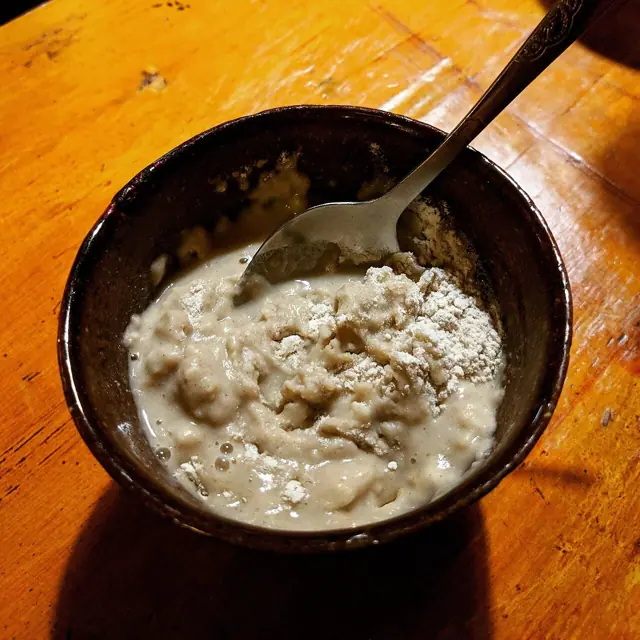
糌粑Tsampa roasted-barley dough · vegRoasted barley flour kneaded with butter tea into a dough, the food Tibetans have carried on every road for centuries.Photo: Jpatokal, CC BY-SA 4.0, via Wikimedia CommonsOrder it in Chinese
您好,一份糌粑,麻烦教我们怎么捏,谢谢您。
Hello, one tsampa, and please show us how to knead it.
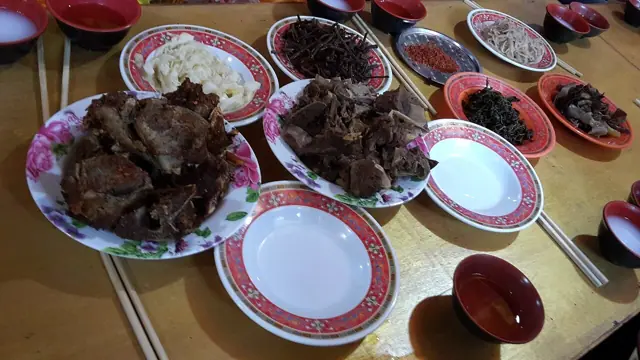
牦牛肉汤锅Yak-meat soup potDark, lean yak beef simmered plainly with bone marrow and salt, meat that tastes of the plateau wind.Order it in Chinese
您好,一锅牦牛肉汤锅,配青菜和蘸水,谢谢您。
Hello, one yak-meat soup pot with greens and dip please.
牦牛酸奶Yak yogurt · vegSour, thick spoon-standing yogurt topped with sugar, the plateau dessert that resets your mouth after meat.Order it in Chinese
您好,两碗酸奶,糖少放一点,谢谢您。
Hello, two yogurts with light sugar please.
Before you order
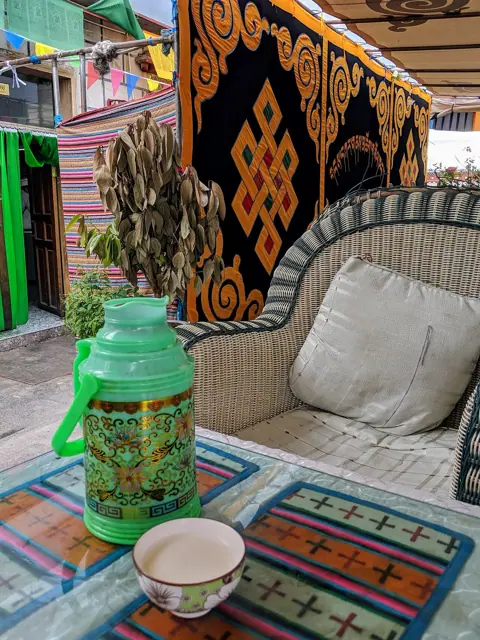
Some teahouses list no prices; ask before sitting, and note sweet tea is normally a flat per-pound rate.
Dried-cheese buns are an acquired sour; try one before ordering a basket.
At nearly 4,000 meters rice can come underdone; send it back politely, kitchens will re-steam without fuss.
Point at the Chinese: it is the name on the menu.
Know before you go
What people who went wish they had known. Their words, gathered with sources; a guide, not checked facts.
For Gyantse, minibuses and jeeps leave the south side of the main traffic circle early in the morning — the day trip rides on an early start · early morning
Shops near the monastery cater to pilgrims rather than tourists; beds cost more than Lhasa and budget picks are few — book ahead
The city sits at 3,800 m — keep the first day slow, walk at half pace and drink more water than feels natural · first day in town
Trains from Lhasa run just under three hours; the station sits south of the city and the sights all walk from town
One trick to know about
Unlicensed taxis and carriage faresAround Gyantse, unmarked cars solicit rides and horse-carriage drivers quote one price then ask anotherAgree the full price and route before boarding; prefer the morning minibus circle or a booked car
Where to stay
Samzhubzhi old town (Tashilhunpo) 桑珠孜老城(扎什伦布寺)12 min to Shigatse Railway Station 日喀则站Good for first visits; the monastery kora is out the door and the old market lanes run beside it
whitewashed lanes below the monastery walls; butter lamps, barley fields at the edge Avoid if you need oxygen-equipped rooms; stock is basic and altitude is 3,836 m.
Shanghai Road–Heilongjiang Road quarter 上海路—黑龙江路城区15 min to Shigatse Railway Station 日喀则站Good for the newer grid with banks, bakeries and easier parking for onward permits
wider streets, poplar rows; quieter after 21:00 Avoid if dawn at the monastery gates is the goal; that is 10-15 min away.
Foreign visitors to the Tibet Autonomous Region join a tour run by an authorized travel agency, or obtain permission in advance from the Tourism Administration of the Tibet Autonomous Region.
Staying somewhere other than a hotel - a private rental, a friend's or family's home - the guest or the host registers with the local police within 24 hours of moving in.
Since 21 September 2026 this out-of-hotel registration can be done online anywhere in China through National Immigration Administration online channels, with the same effect as going in person.
Since July 2024 hotels and booking platforms across China are asked not to turn foreign guests away over missing 'foreign-guest licence' requirements, and platforms should not carry 'not open to foreign guests' listings.
Without approval a foreigner may not enter areas restricted to foreigners. The list of such areas is not published centrally - check locally before travelling.