The numbers are the sights listed below. A dashed circle is a sight beyond this map's edge, set on the side it lies: 3 Yarkhoto, about 30 km west. Open the map full size
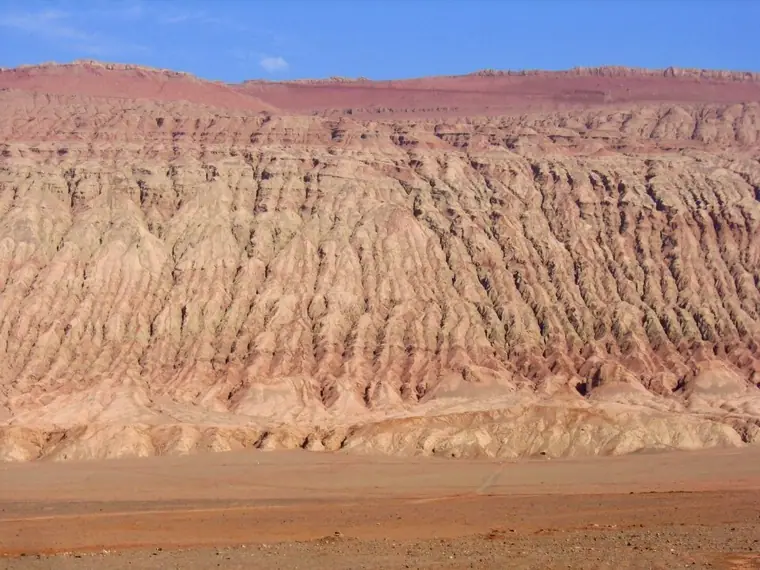
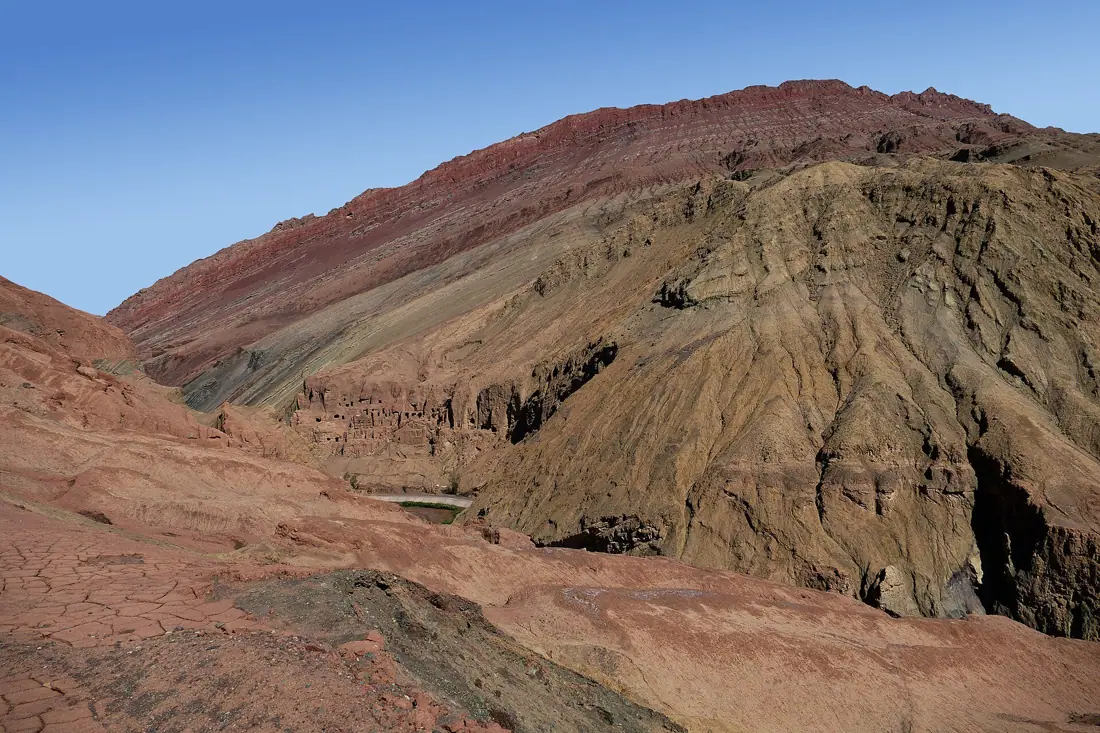
A range of eroded red sandstone hills in the Turpan Depression, one of the hottest and driest parts of China. The ridges are deeply grooved and change colour through the day.
Give it: half a day
Hoursnot checked yet
ClosedNone — open every day
'No place in China is hotter' — the red ridges bake by late morning, so photograph at the loop's first or last stop and stay in the shade between
The Journey-to-the-West lore (the flaming barrier) is the story locals tell — the big thermometer and the camel pens are the tourist layer on top
The remains of an ancient city on a plateau near Turpan, Xinjiang, also known as Jiaohe. It was an important stop on the Silk Road and was abandoned centuries ago, leaving earthen walls and streets.
Give it: half a day
Hoursnot checked yet
ClosedNone — open every day
Go late afternoon: the plateau tableland catches low sun and the tour groups thin
It is the intact one of Turpan's two great ruined cities — a monastery-and-street grid you walk on the original plateau surface
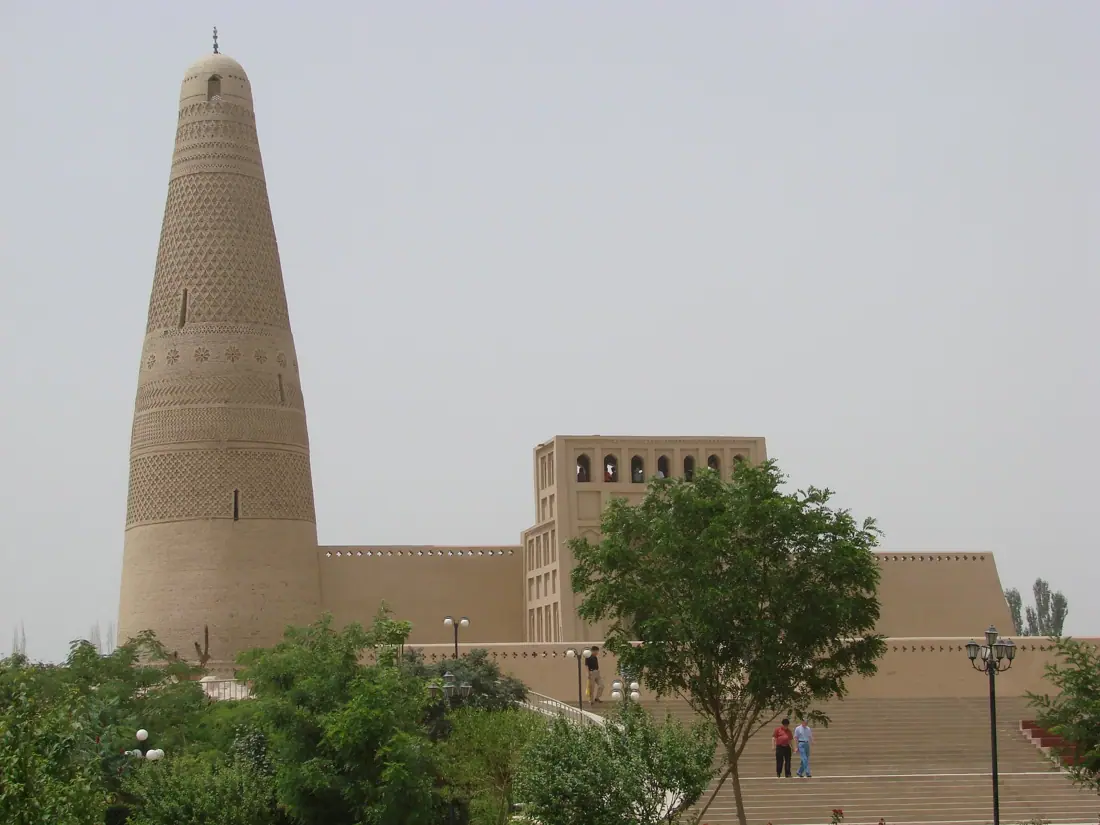
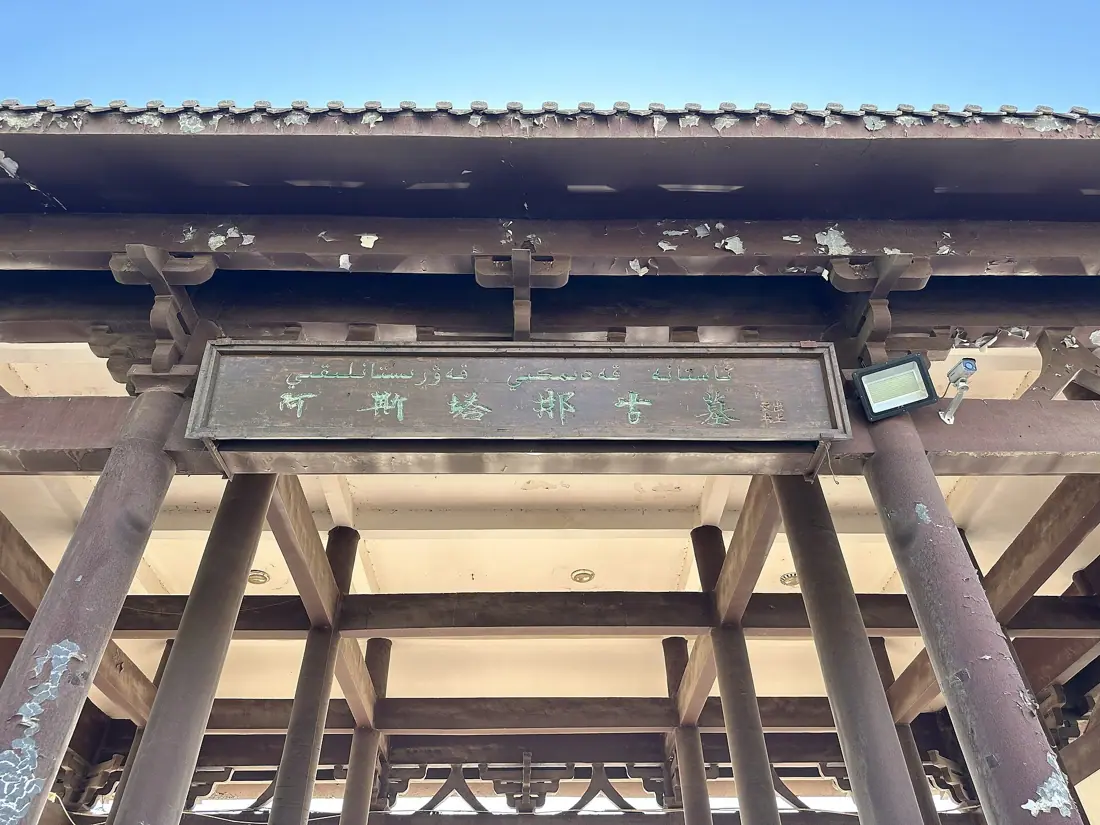
A tall, tapering minaret and small mosque built in the 18th century in the Uyghur style, with patterned brickwork and no tile. It stands at the edge of Turpan, near the old Silk Road routes.
Give it: 1–2 hours
Hoursnot checked yet
ClosedNone — open every day
Pair it with the Jiaohe side of town on one bus-102 afternoon — the two ends of the same line
An ancient cemetery near Turpan used from the third to the eighth centuries, where dry conditions preserved clothing, documents and food. It is an archaeological site, not a park.
Give it: 1–2 hours
Hoursnot checked yet
ClosedNone — open every day
Do not touch the chamber murals, and stay out of the unopened passages — both rules posted
The tombs were Gaochang's cemetery and sit just outside that ruined city — do both on the same east-side drive
Three chambers are open to the public; the dry air kept the grave goods uncanny — dumplings 'as intact as when fresh' and a 1.9-m Gaochang general
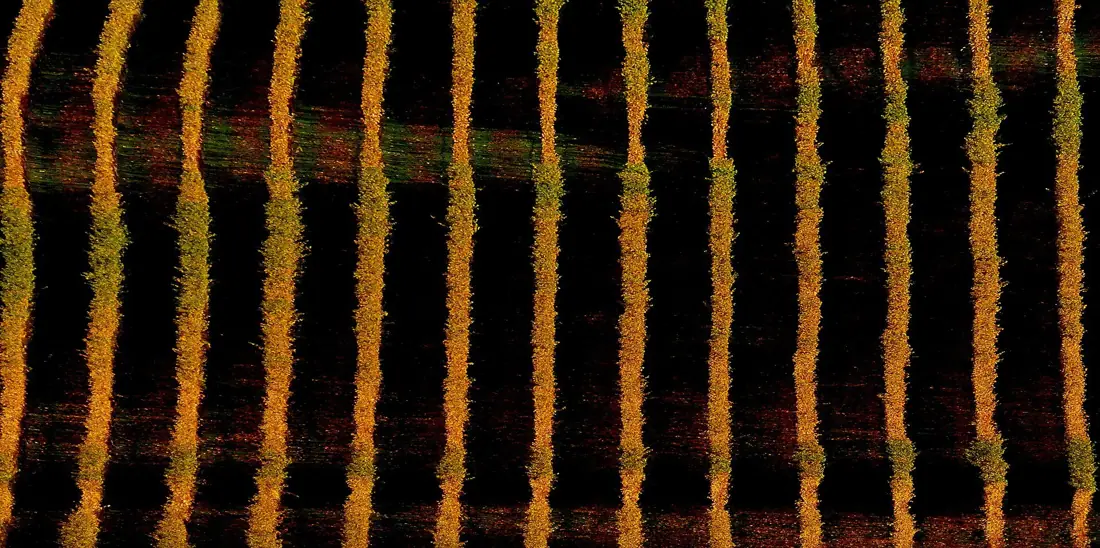
A valley of vineyards and fruit trees in the Turpan Depression, kept green by an old irrigation system. It is known for grapes and for the shade of its trellised lanes.
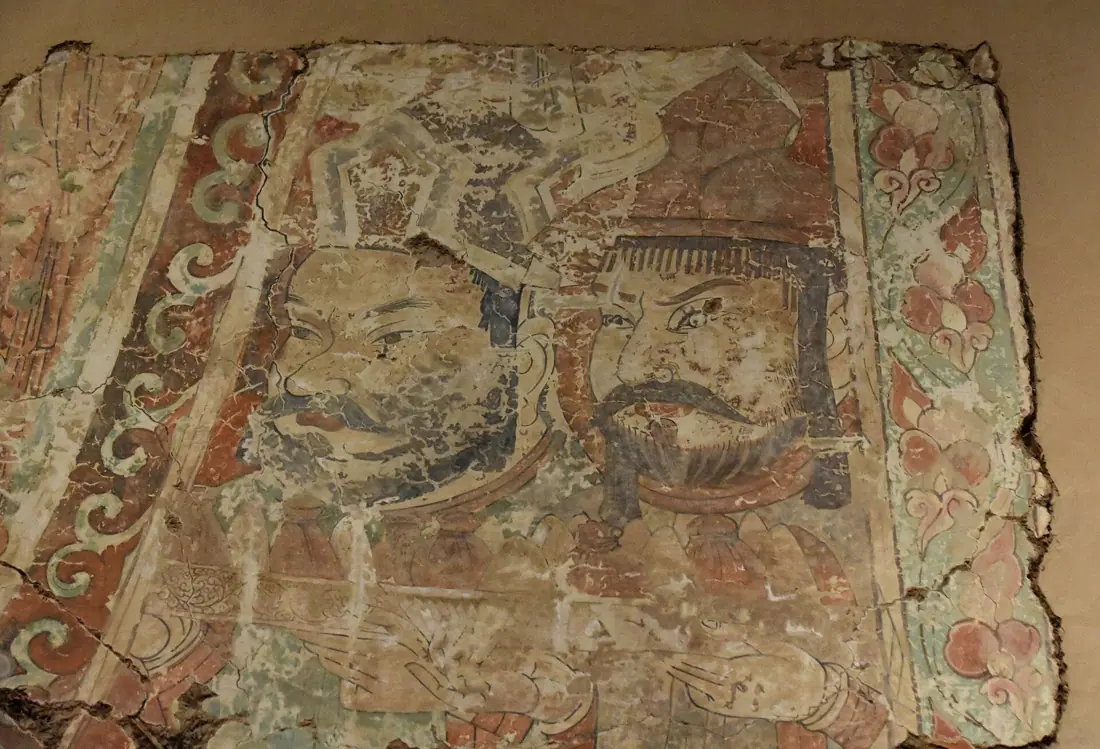
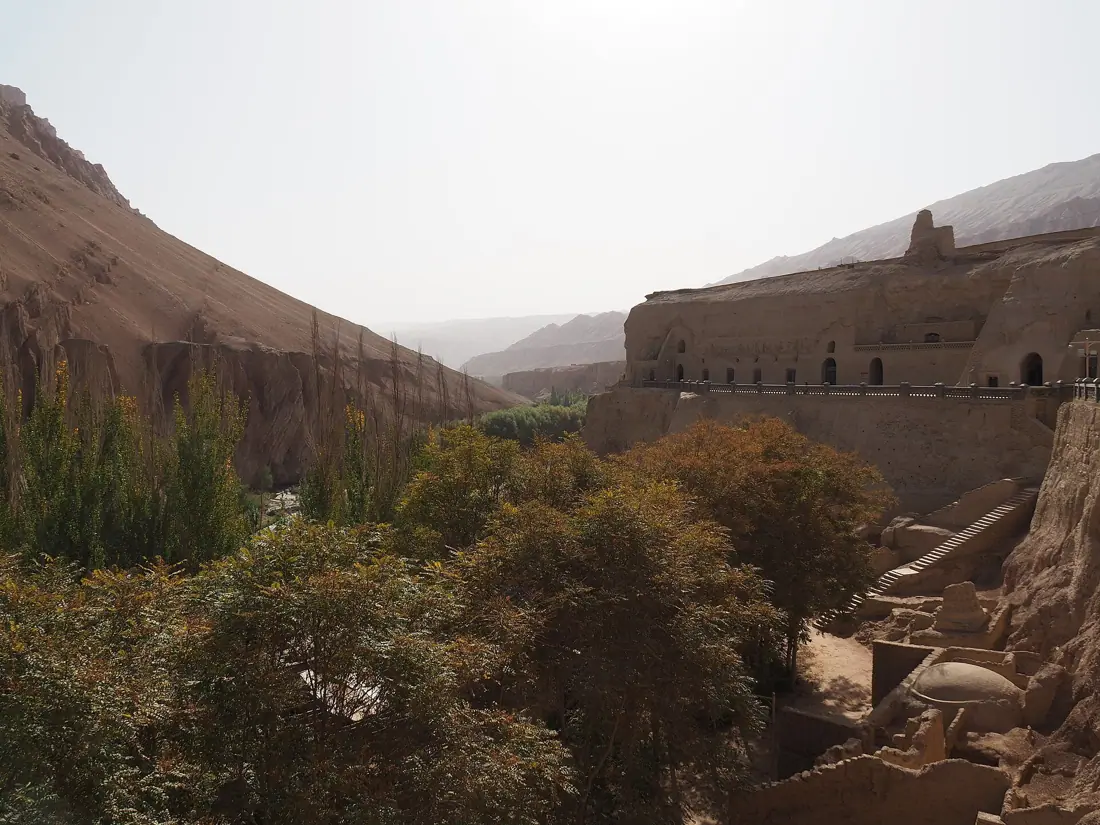
A group of Buddhist cave temples in the Turpan depression of Xinjiang, with murals and carved niches. They are among the earliest Buddhist cave sites in the region.
Give it: 1–2 hours
Hours09:30–18:00 · last entry 18:00
The valley's Uyghur courtyards and grape-drying houses are the living half — walk past the ticketed strip into the lanes
China’s second rating (4A) · Protected national monument
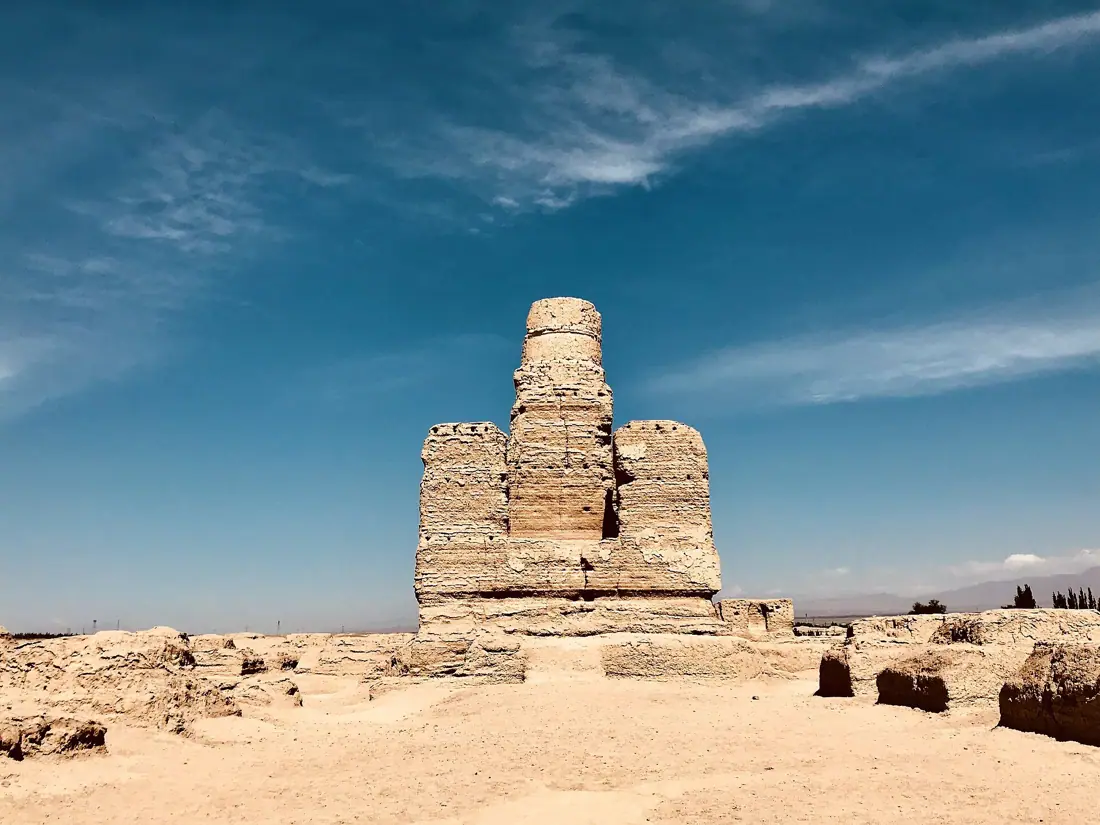
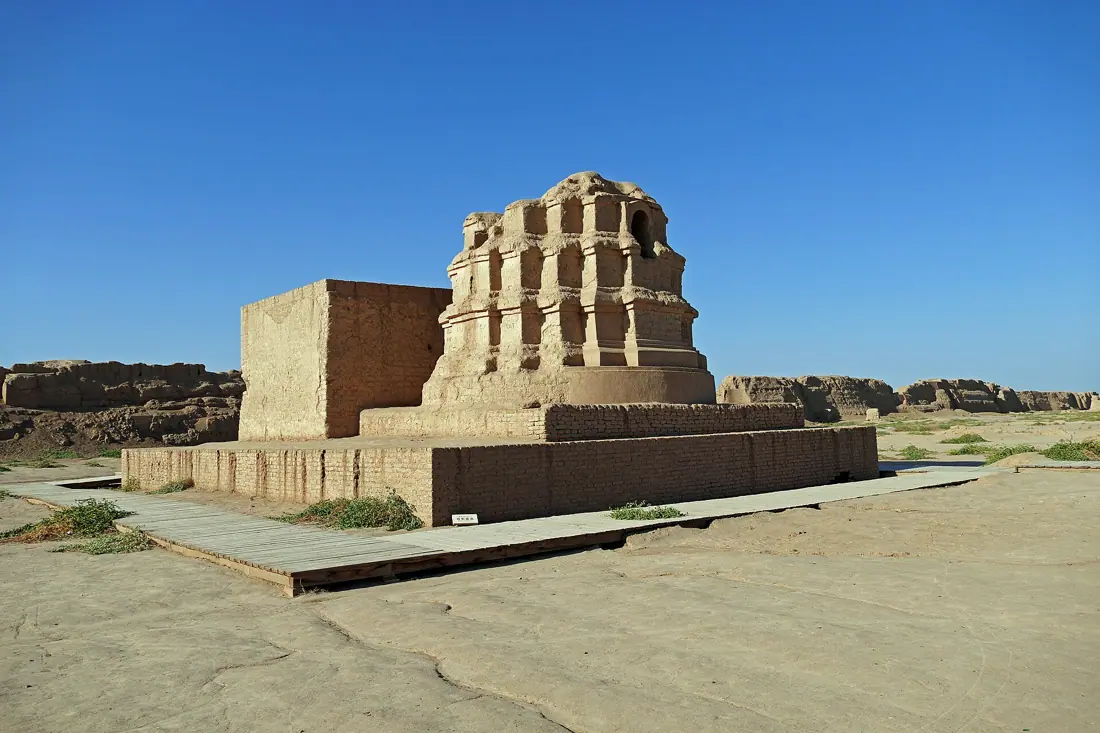
The ruins of a walled oasis city on the northern Silk Road, with remains of temples, stupas and streets. It was a major centre of Buddhism and later a Uyghur capital.
Give it: 1–2 hours
Hoursnot checked yet
The walled city makes a half-day out east — tickets and the site shuttle are arranged at the gate, and the classic pairing is the Astana tombs on the same run
What you walk is walls and street grid under open sky — morning light or shadowed late afternoon reads the layout best
无核白葡萄Seedless white grapes · vegTurpan is named for these: seedless green grapes from the valley's trellises, sun-sweet, sold by the kilo in season.Order it in Chinese
您好,麻烦您称一斤无核白葡萄,先尝一粒。
Hello, one kilo of seedless white grapes - may I taste one first please?
Hello, one polo rice plate with raisins added please.
托克逊拌面Toksun mixed noodles · halalThe pulled-noodle plate this county is proud of: chewy strands under fiery stir-fried lamb and long peppers.Order it in Chinese
您好,麻烦您来一份托克逊拌面,微辣。
Hello, one Toksun pulled-noodle plate, mild chili please.
烤羊肉串Lamb skewers · halalTurpan's evening soundtrack is the kebab grill: cumin-smoked lamb skewers eaten under the trellises.Order it in Chinese
您好,麻烦您来十串烤肉,辣子少些。
Hello, ten lamb skewers with less chili powder please.
豆豆汤饭Bean and noodle-square soup · halalTurpan's homely soup: little noodle squares and beans simmered with tomato - light where the lamb plates are not.Order it in Chinese
您好,麻烦您来一碗豆豆汤饭,谢谢。
Hello, one bean and noodle-square soup please. Thank you.
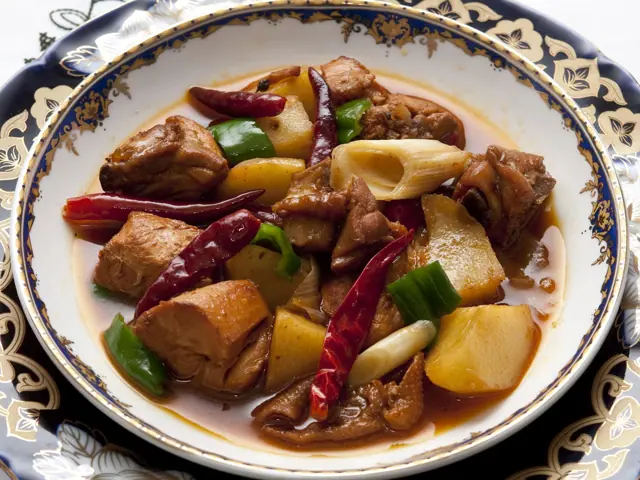
Hello, one medium big-plate chicken with belt noodles added, for four people please.
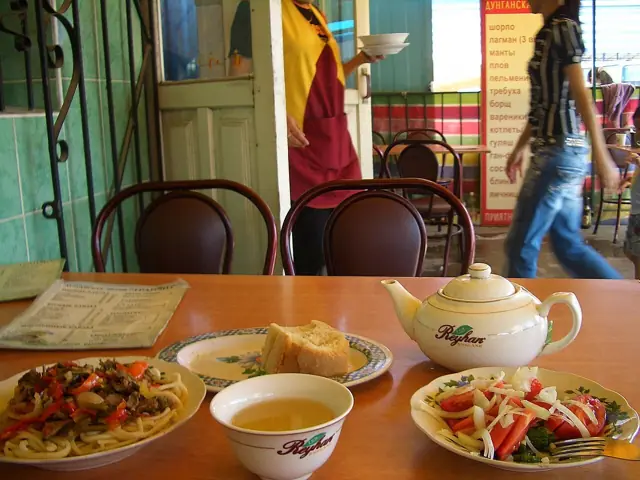
拉条子Hand-pulled noodles with topping · halalXinjiang's everyday noodle: chewy hand-pulled strands mixed at the table with stir-fried lamb and peppers.Photo: Vmenkov, CC BY-SA 3.0, via Wikimedia CommonsOrder it in Chinese
您好,麻烦您来一份过油肉拌面,面多些。
Hello, one pulled-noodle plate with fried-meat topping, extra noodles please.
烤包子Clay-oven lamb parcels · halalCrisp tandoor pockets stuffed with diced lamb, onion and pepper - the Xinjiang grab-and-go lunch.Order it in Chinese
您好,麻烦您来三个烤包子,刚出炉的。
Hello, three baked lamb parcels fresh from the tandoor please.
Hello, one naan fresh from the tandoor, hot please.
Before you order
Raisin and dried-fruit stalls quote per kilogram and pack big bags quickly. Taste first, buy small, and watch the scale.
Roast whole lamb is priced by weight and meant for groups. Solo travelers do better with skewers and polo rice.
Grape season is August to September. Outside it, the valley fruit comes out of cold storage and tastes of it.
Point at the Chinese: it is the name on the menu.
Know before you go
What people who went wish they had known. Their words, gathered with sources; a guide, not checked facts.
Bus 102 is the spine: last stop west is Jiaohe, last stop east is Emin Minaret — the rest need a hired vehicle
City buses cost 1 yuan (schedules on Amap run stale) — confirm return times with the driver when you board
Group the sights by direction: west for Jiaohe, east for Bezeklik-Flaming-Grape Valley-Gaochang-Astana — mixing directions burns the day
The depression floor sits 154 m below sea level and runs into the forties in summer — do the ruins at dawn and dusk, museums and Grape Valley shade at midday · summer
One trick to know about
'Friends and uncles' ride offerA friendly local practises English, then offers a drive to see the sights with 'friends' and 'uncles' — only money for gas is needed, and the price growsThank them and walk on; hire a licensed taxi or split a known full-day rate (about 450 yuan) instead
Where to stay
Old town & Grand Bazaar area 老城—大巴扎一带25 min to Turpan North Railway Station 吐鲁番北站Good for first visits; the bazaar, the mosque and the minaret are one grid, grape trellises over the lanes
low adobe-and-vine streets; raisin stalls, naan ovens, 40-degree evenings Avoid if you need late trains; the HSR station is 20 min out.
Grape Valley 葡萄沟30 min to Turpan North Railway Station 吐鲁番北站Good for sleep inside the vine-shade; drying houses and streams ten degrees cooler than the stones outside
a green canyon of grape trellises; birdsong, mulberries, cool courtyards Avoid if you want restaurant choice at night; the valley closes with the light.
Staying as a foreign visitor: the rules
Hotels register foreign guests at check-in and report it to the local police; the guest does not need to do anything.
Staying somewhere other than a hotel - a private rental, a friend's or family's home - the guest or the host registers with the local police within 24 hours of moving in.
Since 21 September 2026 this out-of-hotel registration can be done online anywhere in China through National Immigration Administration online channels, with the same effect as going in person.
Since July 2024 hotels and booking platforms across China are asked not to turn foreign guests away over missing 'foreign-guest licence' requirements, and platforms should not carry 'not open to foreign guests' listings.
Without approval a foreigner may not enter areas restricted to foreigners. The list of such areas is not published centrally - check locally before travelling.
Turpan from December to February — fine in December, fine in January, fine in February. A January day is about -4° with nights near -11°. Cold, dry, sunny; the ruins are yours.
What you’ll do
Eat grapes under the pergolas of Grape Valley2–3 hours
Sit under the vines, pick what you can reach, and pay by the plate; hundreds of varieties grow here
Watch sunrise from the Flaming Mountains before the heat2–3 hours
The red sandstone glows at first light; by noon in summer the rock is too hot to stand near
Duck into a karez underground channelan hour
Walk the hand-dug underground canals that keep this desert city alive; the air drops ten degrees inside
Wander the mud-brick lanes of Tuyoq at golden hour2–3 hours
A thousand-year-old oasis village of mud walls and carved doorways, quietest and prettiest near sunset
Try sand therapy in the dunes2–3 hours
Locals bury their legs in hot sand as a traditional cure; clinics by the dunes offer supervised sessions in summer
Shop the bazaar for dried fruit and Atlas silk2–3 hours
Raisins from the drying sheds and shimmer-patterned silk are the things to bring home